Libyan prosecutors confirm the death of Saif al-Islam Gaddafi: Details of the investigation
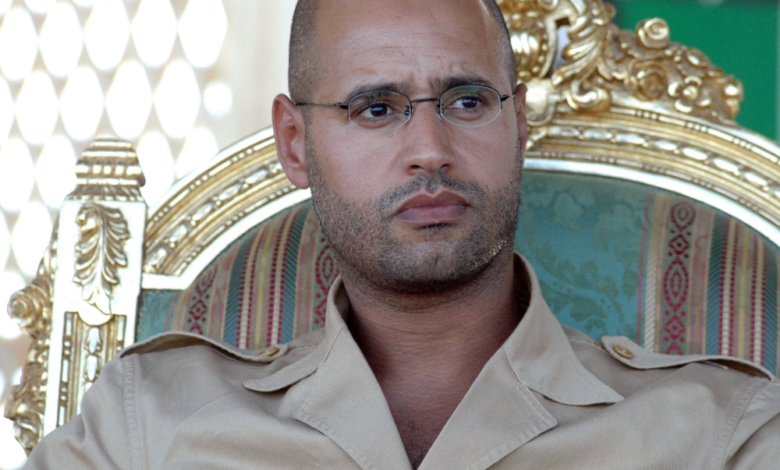
In a significant security and political development that has shaken Libyan circles, the Public Prosecutor's Office in Tripoli officially announced on Wednesday the opening of an urgent investigation into the death of Saif al-Islam Gaddafi , son of the late Libyan leader Muammar Gaddafi. The prosecution confirmed in its statement that his death resulted from a direct gunshot wound, putting an end to years of speculation surrounding the fate of the man who was once considered the leading candidate to succeed his father.
Details of the incident and the criminal report
The Attorney General's office reported that a specialized team, including prosecutors, forensic doctors, and criminal experts, was dispatched to Zintan (southwest of Tripoli), where Saif al-Islam was residing. The team examined the body and conducted the necessary investigations at the crime scene.
The official statement, published on the Public Prosecutor's Office's Facebook page, read: "The forensic examination and autopsy confirmed that the victim sustained fatal gunshot wounds from multiple gunshots." The Public Prosecutor's Office confirmed that "intensive criminal investigations have been launched to identify the perpetrators and suspects in preparation for their prosecution," while the date and location of the funeral have not yet been announced.
Defense narrative: "Commandos" behind the liquidation
For his part, Marcel Ceccaldi, the French lawyer representing Saif al-Islam Gaddafi, revealed initial details of the attack to AFP. Ceccaldi explained that his client was killed inside his residence in Zintan following an attack carried out by "a commando group of four people," noting that the attackers' identities remain unknown. He described the operation as a premeditated assassination.
From "reformer" to internationally wanted: historical background
Saif al-Islam Gaddafi is a controversial figure in modern Libyan history. Before the outbreak of the February 17, 2011 revolution, he spent years trying to present himself as a moderate reformer, leading development projects and initiatives to resolve contentious issues with the West. However, this image completely collapsed with the start of the popular uprising, as he appeared in televised speeches threatening protesters with "rivers of blood," making him a prime target for the revolutionaries.
Following the fall of his father's regime and his father's death in 2011, Saif al-Islam was captured by the Abu Bakr al-Siddiq Brigade in Zintan (145 km from Tripoli), where he remained in detention for years. During this period, he was tried both in absentia and in person. A court in Tripoli sentenced him to death in 2015 on charges related to war crimes and the repression of protesters. He remains wanted by the International Criminal Court under an outstanding arrest warrant.
Returning to the political scene and the impact of absence
Despite his isolation, Saif al-Islam's name resurfaced strongly in 2017 when the brigade holding him announced his release under a "general amnesty" law issued by the parliament in eastern Libya. In 2021, he surprised the world by appearing in the city of Sabha to submit his candidacy papers for the presidential elections, relying on the support of former regime loyalists (the Green Movement) and some tribes. However, the postponement of the elections prevented his return to power.
The repercussions of the event on the divided Libyan scene
The killing of Saif al-Islam comes at a time when Libya is suffering from a sharp political division and an ongoing struggle for legitimacy between two governments: the internationally recognized Government of National Unity in Tripoli, headed by Abdul Hamid Dbeibah, and the government appointed by the parliament in the east, which is supported by Field Marshal Khalifa Haftar.
Observers believe that Saif al-Islam's absence from the political scene could reshuffle the cards, as he represented a "third party" in the Libyan equation. His killing is expected to provoke angry reactions among his supporters and his tribe, potentially complicating the fragile national reconciliation efforts and opening the door to unforeseen security scenarios in a country that has been searching for stability for over a decade.