King Khalid Hospital in Tabuk 2025: 743,000 tests and international accreditation
King Khalid Hospital in Tabuk, a key component of the Tabuk Health Cluster, achieved significant advancements and outstanding accomplishments in its laboratory and blood bank departments during 2025. These achievements are part of ongoing efforts to enhance operational efficiency and improve the quality of healthcare services provided to patients, in line with the objectives of the Kingdom's healthcare transformation program.
Record numbers in laboratory tests
Official statistics revealed that the regional laboratory and blood bank at the hospital conducted over 743,000 accurate laboratory tests, reflecting the hospital's high capacity and technological readiness. In a significant step to enhance community health security, 5,657 tests were conducted as part of the premarital screening program, representing an increase of nearly 50% in the number of samples. This notable rise was accompanied by considerable success in reducing waiting times, thus simplifying the process for those about to marry and contributing to the reduction of genetic diseases.
Regarding specialized and precise examinations, the Histology Department received 1,622 samples, while the Forensic Medicine Department efficiently processed 1,195 samples. Additionally, 365 tests were conducted in the Electrophoresis Department, achieving an 88% sample turnover rate within the green zone, an excellent indicator of the speed and accuracy of results.
High efficiency in blood bank management
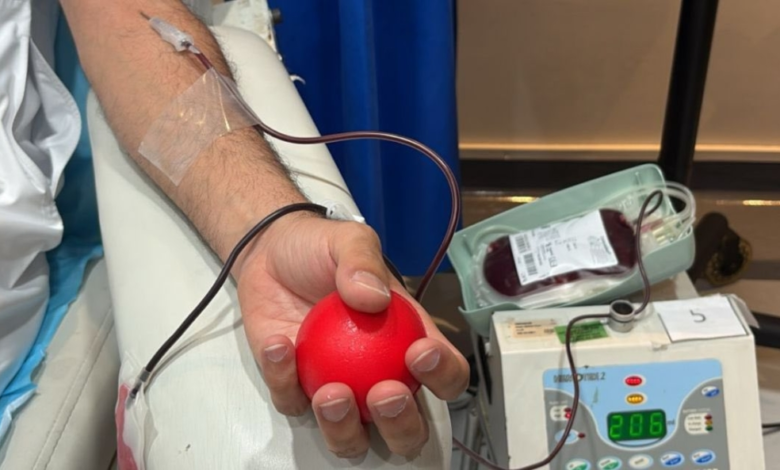
The Tabuk Health Cluster highlighted the vital role played by the hospital's blood bank, which received 4,448 donors, of whom 3,555 completed successful donations, thus bolstering the blood supply for emergencies and surgical procedures. The hospital's efforts extended beyond internal donations; it also conducted 17 external blood donation drives with the participation of 508 donors and screened 10,133 potential donors from across the region to ensure blood safety.
Among the most notable operational achievements, the time required to issue donor results was reduced to less than 18 hours, in addition to reducing the percentage of wasted blood units from 13% to less than 1%. This achievement reflects the application of the highest quality standards and optimal use of resources, placing the hospital among the leading health institutions in managing blood resources.
International accreditations and enhanced practitioner safety
These efforts culminated in the blood bank receiving accreditation from the Saudi Food and Drug Authority (SFDA), an official recognition of its adherence to stringent standards for blood safety and transfusion. Furthermore, to protect healthcare workers, a significant initiative was implemented to issue infectious disease test results for needlestick injuries within just one hour, compared to the previous timeframe of up to three days. This greatly enhances the safety of healthcare professionals and expedites the implementation of necessary preventive and therapeutic measures.
These developments come as part of the comprehensive health movement that the Kingdom of Saudi Arabia is witnessing within Vision 2030, where the health sector in the Tabuk region seeks to localize precise medical services and reduce the need for external referrals, with a focus on the principle of “prevention before treatment” by strengthening early detection programs and raising the quality of laboratory diagnosis.