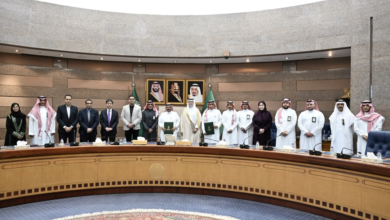
Cabinet: Organizing the National Education Committee and addressing developments in Yemen and Gaza
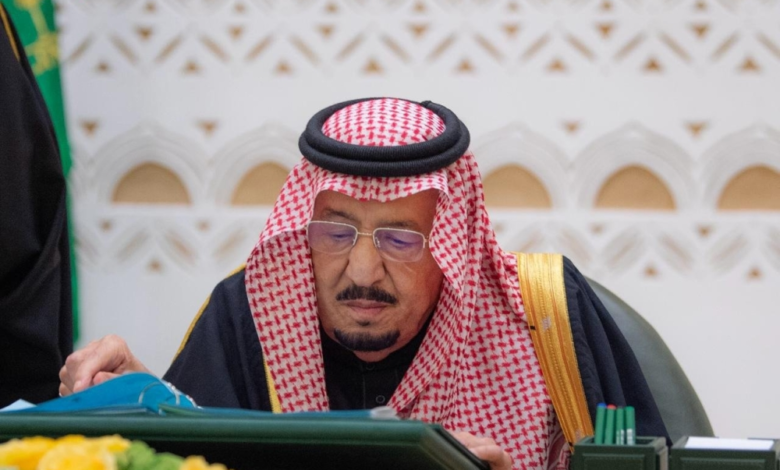
The Custodian of the Two Holy Mosques, King Salman bin Abdulaziz Al Saud, may God protect him, chaired the Cabinet meeting held today in the capital, Riyadh, which witnessed the issuance of a number of important decisions and the discussion of vital political and economic files at the local and international levels, reflecting the Kingdom’s continuous movement towards achieving its national goals and enhancing its leading role globally.
The Council began its session by reviewing the content of the intensive diplomatic communications received by His Royal Highness Prince Mohammed bin Salman bin Abdulaziz, Crown Prince and Prime Minister, from a number of leaders of brotherly and friendly countries, including Turkish President Recep Tayyip Erdoğan, Syrian President Ahmed al-Sharaa, Qatari Emir Sheikh Tamim bin Hamad, and the Prime Minister of Pakistan. These communications reflect the pivotal role played by the Kingdom of Saudi Arabia in promoting regional stability and coordinating political positions regarding the current challenges facing the region, thus underscoring the depth of the strategic relations that bind Riyadh to the decision-making capitals of the region.
Regarding Yemen, the Cabinet reaffirmed the Kingdom's unwavering support for the security and stability of the Republic of Yemen. The Cabinet welcomed the request by the President of the Yemeni Presidential Leadership Council to hold a comprehensive conference in Riyadh for southern factions, a step reflecting the Kingdom's continued commitment to fostering Yemeni-Yemeni dialogue and its tireless efforts to unify ranks and end the conflict in a way that fulfills the aspirations of the brotherly Yemeni people. This welcome complements the Kingdom's previous initiatives, such as the Riyadh Agreement, which aim to bridge the divide and prioritize dialogue to achieve lasting peace.
The Council also addressed the deteriorating humanitarian situation in the Gaza Strip, emphasizing the continuation of the Saudi air, sea, and land bridge to provide relief to the Palestinian people. This extensive support is an extension of the Kingdom's long history of supporting the Palestinian cause. Saudi Arabia is among the largest donors of humanitarian aid to Palestine, and the directives of its wise leadership affirm that Palestine remains a central and deeply rooted issue in the conscience of the Saudi leadership and people, and that support will not cease until these difficult circumstances are overcome.
On the domestic and economic front, the Council highlighted the launch of the Hexagon Data Center project in Riyadh, a significant strategic step within the Kingdom's Vision 2030. This largest project of its kind aims to enhance the Kingdom's digital sovereignty and build a sustainable economy based on data and artificial intelligence. Through these projects, the Kingdom is working to build an integrated digital ecosystem that supports the competitiveness of the national economy and attracts global technology investments, solidifying its position as a regional and global technology hub that keeps pace with the Fourth Industrial Revolution.
The Council concluded its session by issuing a package of regulatory decisions and international agreements, most notably the approval of the organizational structure of the National Commission for Education, Culture and Science . This approval is particularly significant as this commission is the national body responsible for representing the Kingdom and coordinating its efforts with major international and regional organizations such as UNESCO, ALECSO, and ISESCO. This new structure is expected to contribute to strengthening the Kingdom's cultural and educational presence in international forums and developing operational mechanisms that serve Saudi Arabia's soft power and highlight its cultural heritage.
The decisions also included approving agreements and memoranda of understanding with several countries, including the Netherlands in the field of agricultural innovation, China in tourism, and Zambia in the field of combating terrorism and its financing, in addition to renewing the Information Technology Sector Development Program until 2030, and appointing new members to the Local Content and Government Procurement Authority.