King Fahd Causeway traffic jam increases crossing time to 44 minutes; solutions via Nafath
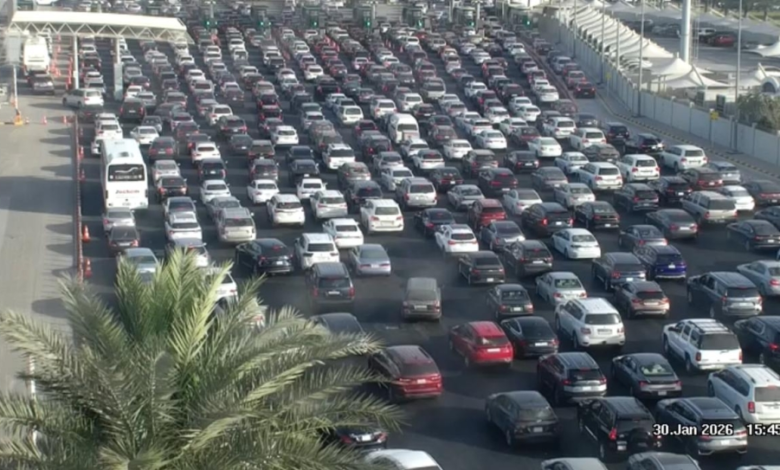
The King Fahd Causeway, the vital artery linking Saudi Arabia and Bahrain, is experiencing heavy traffic and significant congestion in both directions today, Friday. This congestion coincides with the peak travel season for weekend getaways, resulting in slower traffic flow and significantly higher waiting times, which operators have described as "high.".
The King Fahd Causeway Authority's control and monitoring rooms recorded an increase in the average crossing time in the procedures area towards the Kingdom of Bahrain, reaching 44 minutes, exceeding the usual rates on normal days. Conversely, the return journey towards the Kingdom of Saudi Arabia recorded a similar time of 42 minutes, reflecting the large volume of people during peak hours of this holiday and the increased desire to travel between the two countries.
Causes of congestion and smart solutions
The usual congestion at this time of year was exacerbated by the implementation of new security measures requiring manual fingerprinting of each traveler, creating an additional logistical challenge for the long queues of vehicles already crowding the waiting areas. In response to this pressure, the relevant authorities acted swiftly to activate the "Spatial Verification" service through the government's "Nafath" application. This smart technological solution allows travelers to complete their biometric fingerprinting digitally via their personal phones, thus overcoming the delays caused by traditional manual scanning and expediting the crossing process.
King Fahd Causeway: A strategic artery with a rich history
To understand the context of this congestion, one must consider the historical and strategic importance of this crossing. The King Fahd Causeway was officially opened in November 1986, fulfilling a long-held dream of connecting the two brotherly nations by land. Stretching approximately 25 kilometers, it is one of the longest bridges in the Middle East and the world. Since its opening, the bridge has become more than just a passageway; it has transformed into a symbol of brotherhood and close ties between Saudi Arabia and Bahrain, contributing to the strengthening of social bonds between families in the Eastern Province and Bahrain.
Economic and touristic importance
The bridge's importance is directly reflected in the region's economic and tourism activity. It serves as the main land crossing, fueling Bahrain's tourism sector, particularly during weekends, holidays, and peak seasons, when thousands of Saudi visitors and residents of the Kingdom flock to it. It also plays a pivotal role in trade and the movement of goods, making it a cornerstone of the Gulf economy. Recent technological solutions, such as the use of the "Nafath" application, are part of a broader trend toward digital transformation, facilitating the movement of this massive human and economic flow and ensuring the continued smooth operation of this vital facility.