The eruption of Kilauea volcano in Hawaii: fire shows and amazing facts
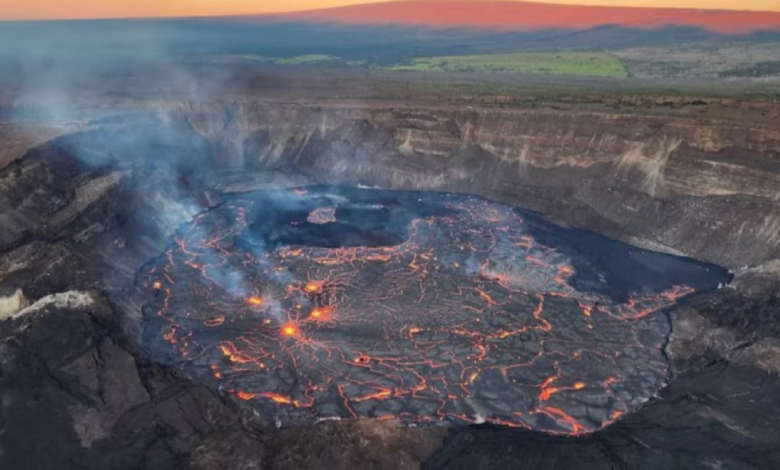
Kilauea , one of the world's most active and famous volcanoes, has once again captured attention on Hawaii's Big Island , resuming its intermittent eruptions and producing spectacular natural fire displays. The U.S. Geological Survey has recorded fountains of bright red lava, some reaching heights of 15 to 30 meters, illuminating the night sky and dazzling tourists and observers.
Details of the current eruption and scientific monitoring
According to official reports, the current volcanic activity remains safely contained within the boundaries of Hawaii Volcanoes National Park , specifically in the North Cone. Scientists from the U.S. Geological Survey confirmed they are closely monitoring the increased seismic activity and lava flow, noting that there is currently no immediate threat to nearby communities. This makes the event a prime example of scientific and touristic potential rather than a natural disaster.
Kilauea: A long history of geological activity
This eruption is not a rare occurrence for Kilauea; it boasts a rich and continuous geological history. Classified as a shield volcano, Kilauea has experienced almost continuous eruptive activity since 1983, drastically altering the landscape of the surrounding area over the past decades. It is one of six active volcanoes that comprise the Hawaiian Islands and is located next to Mauna Loa, the world's largest active volcano by both size and mass.
Although Kilauea is smaller than its giant neighbor Mauna Loa, it surpasses it in activity rates and eruption frequency, making it a natural open laboratory for geologists and volcanologists from around the world to study Earth dynamics and the formation of volcanic islands.
Tourist and economic importance
Kilauea volcano plays a pivotal role in Hawaii's tourism sector; the sight of flowing lava and the nighttime glow of its crater attracts thousands of visitors annually. During periods of eruption, helicopter tours are popular, offering tourists a rare panoramic view of nature's forces reshaping the land. This influx of tourists contributes significantly to the island's local economy, as visitors flock to witness the volcano's natural "fireworks displays," while strictly adhering to the safety guidelines set by local authorities and the National Park Service.
In conclusion, the Kilauea eruption remains a powerful reminder of the vitality of planet Earth, combining breathtaking beauty and awe, and confirming Hawaii's status as one of the world's most important geological and tourist destinations.