Japan earthquake today: Details of the 5.1 magnitude tremor on Honshu Island
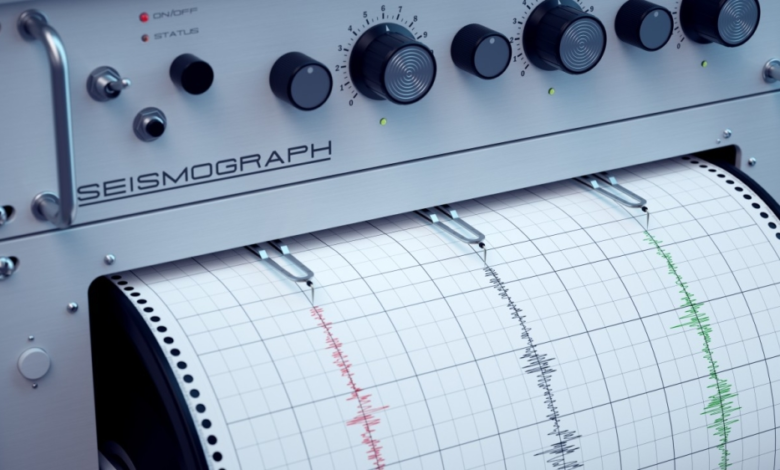
Geological monitoring stations in Japan recorded new seismic activity today, with a moderate earthquake measuring 5.1 on the Richter scale striking off the east coast of Honshu Island. Honshu is the main and largest island in the Japanese archipelago, home to the capital, Tokyo, and several other major cities. The German Research Centre for Geosciences (GFZ), a global authority on seismic data, confirmed the tremor, stating in its initial report that there were no immediate casualties or damage, which brought a sense of relative calm.
Technical data and earthquake epicenter details
Technical reports from the GFZ and Japanese monitoring centers indicated that the earthquake's epicenter was located 10 kilometers below the Earth's surface. In seismology, this depth is classified as "shallow," a characteristic that makes earthquakes more palpable to the population compared to deeper earthquakes, as the seismic energy travels a shorter distance to reach the surface. Despite this, the earthquake's moderate magnitude (5.1) was within limits that Japan's infrastructure could easily withstand. The Japan Meteorological Agency also confirmed that there was no tsunami threat, the primary concern that typically accompanies undersea earthquakes in that region.
Japan and the Ring of Fire: A Complex Geological Context
Today's earthquake cannot be separated from the geological reality of Japan, which lies at the heart of the Pacific Ring of Fire. This horseshoe-shaped region, stretching for 40,000 kilometers, is home to more than 75% of the world's active volcanoes and 90% of the world's recorded earthquakes. Japan is situated at the intersection of four major tectonic plates: the Pacific Plate, the Philippine Plate, the Eurasian Plate, and the North American Plate. This constant jostling and subduction of the plates generates immense pressure in the Earth's crust, which is periodically released in the form of earthquakes, making Japan one of the most earthquake-prone countries in the world.
Historical background and East Coast sensitivities
Any seismic activity off the east coast of Honshu Island carries particular weight in the collective memory of both Japan and the world. This is the same geographical area that experienced the devastating 9.1 magnitude Tohoku earthquake of 2011, which triggered a massive tsunami and the Fukushima nuclear disaster. While today's 5.1 magnitude earthquake is not comparable to that catastrophe and does not pose a similar threat, its occurrence in the same geographical region always necessitates close monitoring by scientists to ensure it is an isolated event and not a prelude to larger activity. Current data indicates that the situation is stable.
Resistance engineering and Japanese safety culture
The lack of damage in today's earthquake, and in other moderate and strong earthquakes, is attributed to Japan's massive investment in earthquake-resistant building engineering. Since amending its Building Standards Code in 1981, Japan has adhered to strict building codes mandating the use of technologies such as seismic isolation and hydraulic dampers, which allow buildings to move flexibly with the tremor rather than resisting it and breaking. In addition, Japan has a sophisticated early warning system (J-Alert) that sends immediate alerts to phones and televisions seconds before the arrival of powerful seismic waves, giving residents valuable time to take shelter and reflecting a deeply ingrained societal culture of preparedness for natural disasters.
The strategic importance of Honshu Island
Honshu is the economic and political heart of Japan, home to its largest urban centers and industrial areas. Therefore, the continuation of normal life and the uninterrupted operation of supply chains and transportation networks (such as the Shinkansen bullet trains) following today's earthquake is a positive sign for both the domestic and global economies. Japan remains a global model for how to cope with harsh natural conditions, transforming geological challenges into a catalyst for engineering and organizational innovation to ensure the safety of its people.