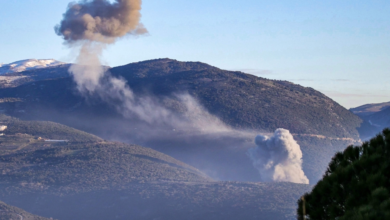
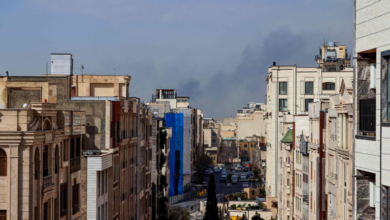
Israel closes its airspace completely amid anticipation of an Iranian attack
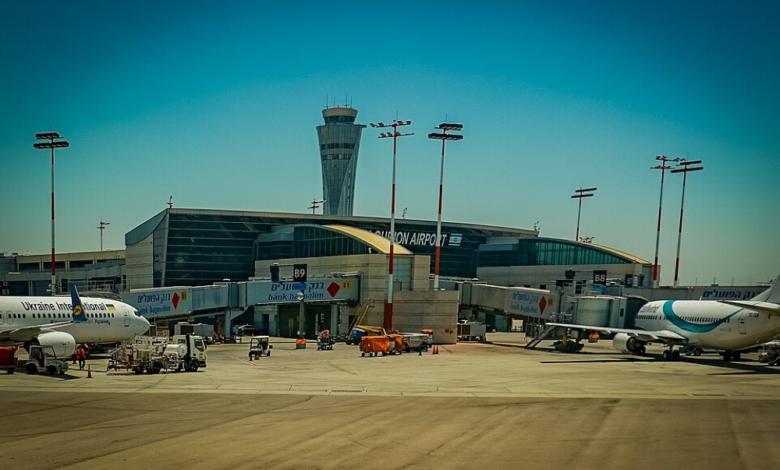
In a move reflecting heightened tensions and an unprecedented escalation in the region, Israel announced Saturday evening the complete closure of its airspace to civilian air traffic. This decision comes as a preemptive measure in light of escalating Iranian threats of a direct attack in retaliation for the targeting of its consulate in the Syrian capital, Damascus.
Background to the escalation: From Damascus to a state of maximum alert
The roots of this tension can be traced back to April 1, 2024, when an Israeli airstrike targeted the Iranian consulate in Damascus, killing several senior commanders of the Iranian Revolutionary Guard Corps, most notably General Mohammad Reza Zahedi. Tehran considered the attack a direct assault on its sovereignty, and Iran’s Supreme Leader, Ali Khamenei, and other officials vowed an “inevitable” and “painful” response. Since then, the region has been on edge, with Israel bolstering its air defenses and placing its forces on high alert, while the United States and other countries have warned against an escalation of the conflict.
Details of the decision and its local impact
Israeli Transportation Minister Miri Regev confirmed that the decision was made based on security assessments, and that the Civil Aviation Authority was instructed to suspend all incoming and outgoing flights. The announcement coincided with the sounding of sirens in various areas, including Jerusalem, and the dissemination of warnings to citizens via mobile phones urging them to remain near shelters. These measures caused widespread anxiety and confusion within Israel, leading to the cancellation and postponement of hundreds of flights and affecting thousands of passengers.
Regional and international importance and implications
The impact of this decision was not limited to Israel alone, but extended to the entire region. Shortly after the Israeli announcement, Jordan, Iraq, and Lebanon closed their airspace as a precautionary measure, causing a near-total paralysis of air traffic in the heart of the Middle East. International airlines were forced to divert or cancel flights, leading to widespread disruption to international flight schedules.
Internationally, this escalation poses a significant challenge to diplomatic efforts aimed at containing the conflict. The United States has reaffirmed its “unwavering” commitment to Israel’s security, while the United Nations, European countries, and Arab states have called on all parties to exercise maximum restraint to avoid a wider regional war that could have serious consequences for global security and stability, as well as potentially impacting global energy markets.