Iran directly attacks Israel: Details of Operation True Promise
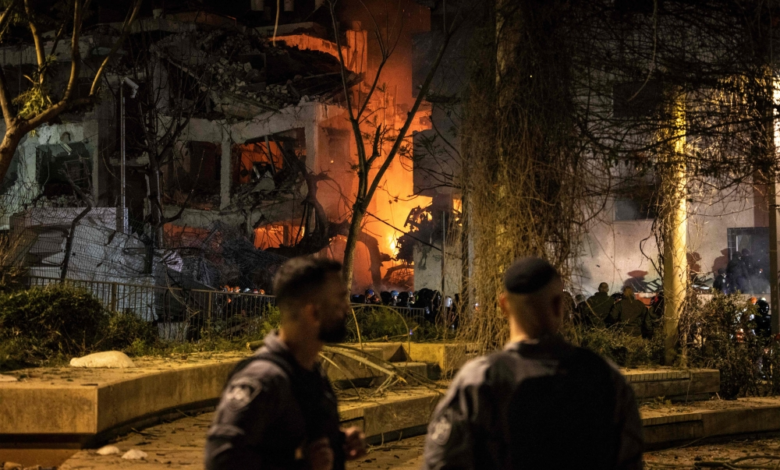
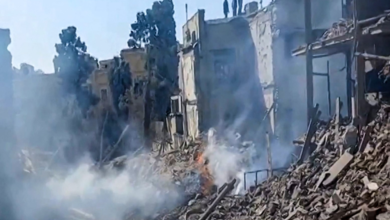
In an unprecedented escalation, Iran's Revolutionary Guard announced a large-scale offensive against targets inside Israel, using dozens of drones and ballistic missiles. Dubbed "True Promise," the operation was described by Tehran as an act of self-defense and a response to Israel's "repeated crimes," most notably the attack on the Iranian consulate in Damascus, Syria.
General context and historical background of the event
This direct attack, the first of its kind launched by Iran from its own territory directly against Israel, breaks the rules of engagement that have prevailed for decades between the two countries. Historically, the confrontation between Tehran and Tel Aviv has relied on what is known as a “shadow war,” waged through regional proxies, intelligence operations, cyberattacks, and assassinations targeting Iranian scientists. However, the Israeli attack on the Iranian consulate in Damascus on April 1, 2014, which killed senior Revolutionary Guard commanders, including General Mohammad Reza Zahedi, marked a turning point, prompting the Iranian leadership to respond directly to maintain its deterrent capability.
Details of the attack and its military dimensions
According to data released by the Islamic Revolutionary Guard Corps (IRGC) and international media, the Iranian attack involved the launch of swarms of Shahed drones, as well as cruise and ballistic missiles. The attack was designed in multiple waves to overwhelm and confuse Israel's advanced air defense systems, such as the Iron Dome, David's Sling, and Arrow systems. Israel and its allies, including the United States, Britain, France, and Jordan, announced that they intercepted and destroyed the vast majority of the projectiles before they reached their targets, with only minor damage reported at the Nevatim Airbase in southern Israel.
The importance of the event and its expected impact
The significance of this attack lies in its shifting the Iranian-Israeli conflict from covert to overt, from indirect confrontation to direct clash between two states. Regionally, this escalation raises serious concerns about the outbreak of a wider regional war that could draw in other parties, threatening the stability of the entire Middle East. Internationally, the attack elicited widespread reactions, with Western countries swiftly condemning the Iranian attack and reaffirming their support for Israel's security, while other parties, including Russia and China, called for restraint and the avoidance of further escalation. The most crucial question now is the nature of the likely Israeli response, which will determine the course of events in the coming days and weeks, and whether diplomatic efforts will succeed in containing the crisis and preventing it from spiraling out of control.