Internet blackout in Iran: Digital isolation and paralyzed life amid protests
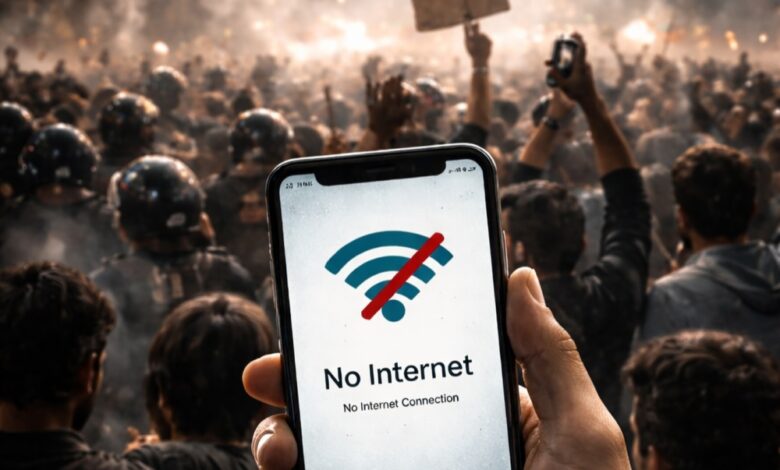
More than 86 million Iranians have been living in near-total digital isolation from the outside world for several days, following the authorities' decision to shut down internet services on a large scale. This measure has disrupted email, text messaging, and global social media applications, plunging the country into an information blackout as protests continue.
Life without a spider web
Since January 8, Iranians have found themselves unable to communicate via their usual digital applications, while telephone networks have suffered from severe disruptions and frequent outages. An employee at a private company bitterly described the situation to AFP, saying, "We go to our offices, but we have no internet. I can't even contact my clients," reflecting the extent of the damage inflicted on businesses and companies that rely on digital communication.
Although international phone calls were partially restored on Tuesday (from within Iran to abroad only), quality remained poor. While global platforms such as YouTube, Instagram, and Telegram were blocked, authorities kept the National Information Network (the domestic internet) operational, allowing local banking and taxi apps to continue functioning—a strategy Tehran typically employs to maintain a minimum level of essential state functions while preventing the flow of information abroad.
Background and context: The "Big Button" strategy
This outage is not an isolated incident, but rather part of a recurring security strategy employed by Iranian authorities during periods of political unrest. This tactic, known as "cutting the big button," aims to achieve two main objectives: first, to prevent protesters from organizing and identifying assembly points via encrypted applications, and second, to prevent images and videos documenting the events from reaching international media outlets and human rights organizations, thus imposing a media blackout on what is happening on the streets.
Capital Diaries: Hustle and bustle by day, tranquility by night
In Tehran's streets, life presents a paradoxical picture; during the day, cafes are packed with patrons and the roads are filled with cars, giving the impression of normalcy. Meanwhile, official newspapers like the conservative Kayhan dominated the headlines with news of pro-government rallies, describing the events as a "historic humiliation" for the United States and Israel.
But as evening approaches, the scene changes completely; economic activity slows down and shops and restaurants close early, despite the absence of an official curfew. A waiter in a café points out that closing time begins at 6:00 PM, reflecting the sense of anticipation and anxiety gripping the population.
The official narrative and the extent of the losses
The Iranian government has adopted a narrative accusing "foreign enemies" of instigating the unrest. Banners displaying images of burned vehicles and slogans condemning the "riots" and attributing them to Israeli agents have appeared in the capital's streets. Foreign Minister Abbas Araqchi stated that the material losses included the burning of 200 shops, 180 ambulances, 53 mosques, and public buses, emphasizing that Washington and Tel Aviv were behind these acts.
This complex situation presents Iran with increasing economic and political challenges, as prolonged internet shutdowns lead to significant losses in the digital economy and international isolation, at a time when citizens are trying to adapt to a difficult daily reality in which they lack even the simplest means of modern communication.