Peru declares a state of emergency on its border with Chile for 60 days
In a preemptive move reflecting escalating regional tensions, the Peruvian government officially declared a state of emergency along its southern border with Chile, specifically in the Tacna region, for a period of 60 days, renewable. This decisive measure, enacted by government decree, aims to bolster security control and address potential challenges arising from the rapidly evolving political situation in its southern neighbor.
Motives behind the decision and the Chilean elections
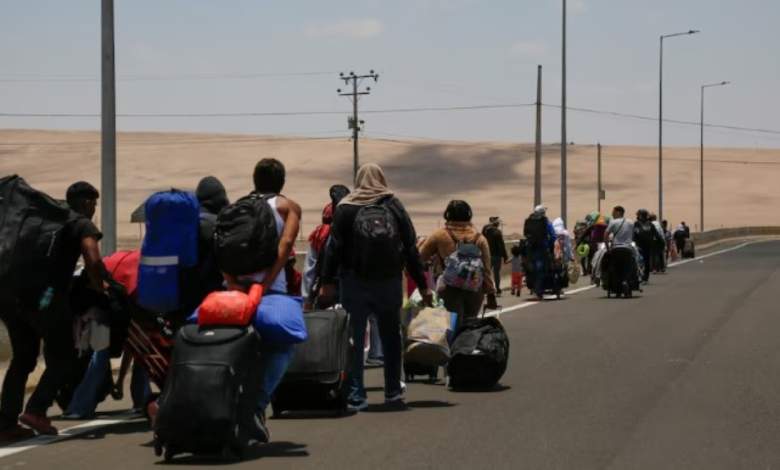
Peru's decision is directly linked to growing fears of a massive influx of refugees and migrants fleeing Chile, coinciding with the crucial presidential elections scheduled for December 14. All eyes are on the potential victory of far-right candidate José Antonio Caste , known for his extremely hardline stance on immigration and migrant issues. Caste is locked in a fierce battle with leftist candidate Janet Jara, creating a highly polarized political landscape that could prompt thousands to leave the country out of fear of future policies.
Security measures and military powers
Under the declared state of emergency, the border region will undergo a radical transformation in security control mechanisms. The decree stipulates the following:
- Deployment of units from the Peruvian army to support the national police forces in surveillance and control tasks.
- Strengthening control over official and unofficial border crossings to prevent illegal infiltration.
- Granting broad powers to security agencies to "address crimes and cases of violence" that may arise as a result of human overcrowding in the border region.
These measures are part of the "internal security" strategy that countries usually resort to when facing threats to their sovereignty or the stability of their borders, where the efforts of the armed forces are integrated with the police to impose order.
The geographical and humanitarian context of the crisis
The border between Peru and Chile is particularly sensitive, as it is separated by the Concordia line in a barren desert region linking the Peruvian city of Tacna and the Chilean city of Arica. This area is a vital transportation artery, but it has recently become a hotspot for humanitarian crises.
Peruvian President José Jerri stated that this decision was imminent and necessary after receiving intelligence and field reports confirming the presence of dozens of migrants stranded in the buffer zone. The humanitarian situation worsened with the spread of videos documented by the governor of Chile's Arica region (approximately 2,200 kilometers north of the capital, Santiago), showing desperate attempts by dozens of people to cross the Chacalluta-Santa Rosa border crossing, raising fears of a humanitarian catastrophe if the situation is not contained.
Potential regional repercussions
The impact of this measure is not limited to security; it also casts a shadow on diplomatic relations and intra-regional trade in South America. The closure or militarization of borders reflects the depth of the migration crisis plaguing Latin America and places the international community before its responsibilities toward migrants caught between the hammer of political extremism and the anvil of stringent security measures.