Death toll from Indonesia landslide rises to 17
Indonesian authorities announced on Monday that the death toll from the landslide disaster that struck West Bandung in Java has risen to 17, while rescue teams are still racing against time to search for dozens of missing people under the rubble and mud.
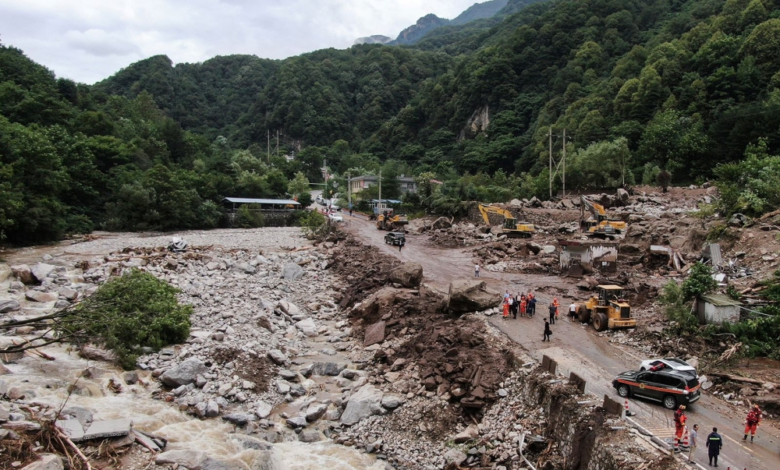
According to data released by the National Disaster Management Agency, torrential rains that fell without stopping caused a massive landslide at around 2:30 a.m. local time on Saturday (7:30 p.m. GMT on Friday), burying homes in two villages about 25 kilometers from Bandung, the country's fourth-largest city.
Details of the disaster and rescue efforts
Adi Dian Permana, head of the local search and rescue department, explained at a press conference that the current estimate of the number of missing persons is around 46, based on field reports from village leaders in the affected areas. This is down from the initial estimate of 73 missing persons. Rescue teams have recovered nine bodies, which have been handed over to the relevant authorities for identification.
In a related development, the Indonesian military confirmed its participation in the rescue operations, stating that four marines were killed in the incident, while 19 others remain missing. Navy Chief of Staff Muhammad Ali stated that the marines were conducting training exercises in the area in preparation for deployment to the border with Papua New Guinea.
Field challenges and fears of new collapses
Search and rescue operations are facing formidable challenges, with some 2,000 military personnel, police officers, and volunteers involved, supported by heavy equipment. Rivaldi Achape, one of the rescuers on site, noted that the greatest danger lies in the unstable soil and the potential for further landslides due to continued rainfall, forcing teams to proceed with extreme caution.
The collapse caused significant damage to more than 50 homes, displacing more than 650 people to temporary shelters, exacerbating the humanitarian crisis in the disaster-stricken area.
The geographical and environmental context of disasters in Indonesia
Indonesia, a sprawling archipelago of thousands of islands, is one of the world's most disaster-prone countries. This is due to its location on the Pacific Ring of Fire, a region characterized by intense seismic and volcanic activity. Additionally, its tropical climate plays a major role, with the rainy season typically lasting from October to March, leading to waterlogged soil and an increased risk of landslides.
On the environmental front, many experts and government reports link the recurrence of these disasters to rampant deforestation. Without vegetation to stabilize the soil, land becomes more vulnerable to collapse during heavy rainfall. The government had previously pointed to the role of environmental degradation in the floods and landslides on Sumatra late last year, which resulted in a devastating loss of life, exceeding 1,200.
This incident adds to a series of similar disasters, as Siau Island in the Sulawesi archipelago witnessed floods earlier this month that killed 16 people, highlighting the urgent need to strengthen disaster management and environmental protection strategies in the country.