Landslide in Indonesia: 53 dead and widespread destruction in Java
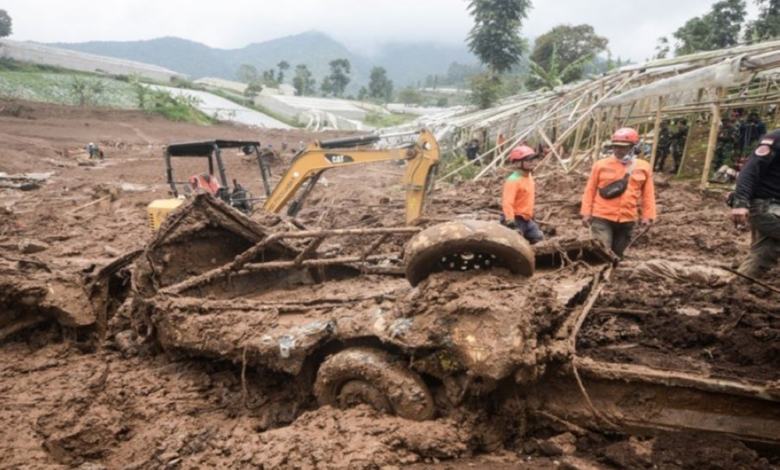
Indonesian authorities announced on Saturday that the death toll from the tragic landslide that struck Pasirlanggo village in West Bandung district on the main island of Java has risen to 53, while rescue teams are still racing against time to find 10 people who remain missing.
Details of the disaster and rescue efforts
Adi Dian Permana, head of the local search and rescue agency, reported that field teams recovered the victims' bodies after arduous searches through mud and debris. Recent improved weather conditions have accelerated the operations, which involve thousands of army and police personnel, volunteers, and Indonesian navy members, some of whom were training in the area and were trapped by the disaster.
The landslide, caused by prolonged heavy rainfall, completely or partially destroyed more than 50 homes, leaving about 650 people homeless and exacerbating the humanitarian crisis in the disaster-stricken area.
The geographical and climatic context of disasters in Indonesia
Indonesia, a vast archipelago of over 17,000 islands, is one of the world's most disaster-prone countries. This is partly due to its geographic location and tropical climate, which includes a heavy rainy season that typically lasts from October to March each year. During this period, the soil becomes saturated with water, increasing the likelihood of landslides, particularly in the mountainous and steep areas for which Java is known.
These incidents occur almost annually, keeping Indonesian emergency services on constant alert during these months. Earlier this month, Siau Island also experienced flash floods that claimed 16 lives, highlighting the scale of the climate challenges facing the country.
Environmental factors and the role of logging
In addition to natural factors, experts and government officials point out that human activities play a crucial role in exacerbating these disasters. The government has previously indicated in reports that deforestation and logging directly contribute to soil instability. Tree roots act as a natural network to stabilize the ground and absorb excess rainwater; without this vegetation cover, the soil becomes fragile and prone to collapse during heavy rainfall.
Sumatra experienced similar disasters late last year that killed about 1,200 people and displaced more than 240,000, prompting authorities to extend search and rescue operations and call for a review of land use policies to reduce these recurring tragedies.