ICAN 2026 Conference kicks off in Riyadh: A Saudi vision for building AI capabilities
ICAN 2026 ), organized by the Saudi Data and Artificial Intelligence Authority ( SDAIA , commenced today in Riyadh . This strategic event is a culmination of the Kingdom's accelerated efforts to strengthen its position as a global hub for technology and innovation, and is being attended by over 10,000 international and local participants.
Strategic context within Vision 2030
This conference is not a mere passing event, but rather a pivotal link in the chain of initiatives of "Saudi Vision 2030," spearheaded by His Royal Highness Crown Prince Mohammed bin Salman. Through these events, the Kingdom is working to achieve the objectives of the National Strategy for Data and Artificial Intelligence, which aspires to position Saudi Arabia among the world's leading nations in this field. The focus on "building human capabilities" is a direct response to the global challenge of the technical skills gap, as the Kingdom seeks to transform from a consumer of technology to a producer and developer of it, relying on the expertise of its citizens.
Education and building minds: the fundamental pillar
During the opening ceremony, the Minister of Education and Chairman of the Board of Trustees of King Saud University, Yousef bin Abdullah Al-Bunyan, affirmed that the progress of education in the age of artificial intelligence is directly based on the ambitious vision of His Royal Highness the Crown Prince, which places human beings at the heart of the national transformation process. In his speech, Al-Bunyan emphasized a crucial point, stating: “Leadership in the field of artificial intelligence is not achieved by importing models, but rather by building minds.”.
The minister explained that the real challenge facing the world today is no longer access to technology, but rather preparing the human and institutional resources capable of employing these technologies to create tangible societal and economic value. He pointed out that the education sector views artificial intelligence as an enhancer of human capabilities, not a replacement for them, and called for the design of educational systems that ensure humans remain in decision-making positions.
ICAN 2026 themes and objectives
The ICAN 2026 conference is distinguished by its high-quality strategic partnerships, including an academic partnership with King Saud University, a knowledge-based partnership with the Human Capacity Development Program, and a strategic partnership with Elm Company. The conference focuses on three main themes that form a roadmap for the future:
- Building sustainable national capabilities in data and artificial intelligence.
- Reimagining the education system in light of the technological revolution.
- Preparing the workforce for the future economy driven by intelligent algorithms.
Global insights on governance and innovation
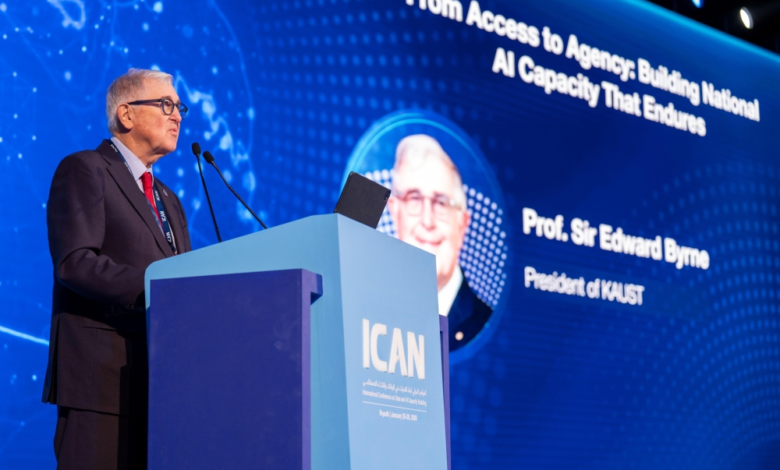
The conference witnessed the participation of a select group of international experts, where the President of King Abdullah University of Science and Technology (KAUST), Edward Byrne, explained that the next challenge revolves around “governance” and the responsible application of technology to achieve a sustainable national impact, pointing to the growing gap between countries’ possession of artificial intelligence tools and their ability to direct them to serve their economies.
For his part, Paris Teltazar, the general manager of the Innovation Lab at IE Business School, drew attention to the importance of soft skills, warning of a decline in critical thinking skills, and stressing that artificial intelligence should be employed as a supportive tool that enhances self-confidence and thinking skills in humans.
Technological movement and international interaction
The conference was accompanied by a technology exhibition featuring over 20 booths from leading technology companies and training institutions, showcasing the latest solutions in digital education and attracting talent. The first day also witnessed the signing of agreements and memoranda of understanding between government and academic entities to enhance integration in capacity building, reflecting the Kingdom's firm commitment to building a promising future for generations to come based on a knowledge economy.