Bondi Beach attackers: Rural training and new gun laws
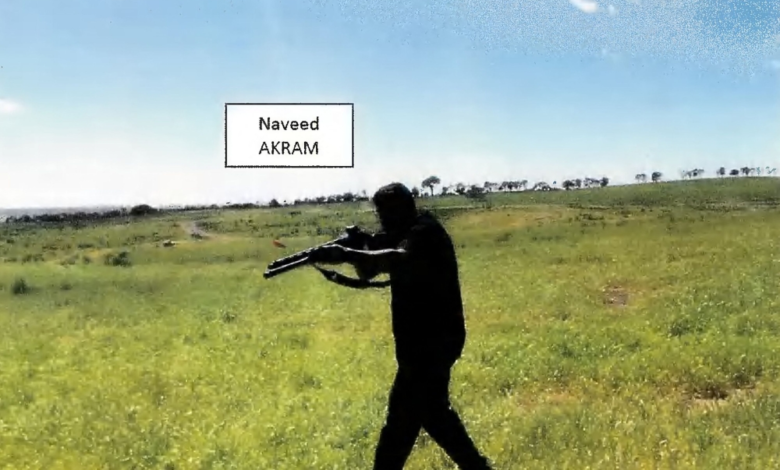
Australian police investigations have revealed new and disturbing details about the deadly attack on Bondi Beach in Sydney, showing that the suspects underwent intensive weapons training in remote areas, indicating deep and thorough planning of the operation that shook Australian society.
Tactical training and advance planning
Police revealed on Monday that the accused, Naveed Akram, 24, and his father, Sajid Akram, 50, had conducted firearms in rural areas of New South Wales before carrying out the attack. Documents and photographs released by authorities showed the two men using rifles and moving in what police described as a "tactical" manner, confirming that the attack was not a spur-of-the-moment act but rather the result of meticulous planning that had been ongoing for months.
In the context of digital evidence, investigators found a video on the phone of one of the accused showing them sitting in front of the flag of the terrorist organization ISIS, where they recited verses from the Holy Quran, spoke about their motives, and denounced the “Zionists,” which gives an extremist ideological character to the incident.
Details of the day of the bloody attack
The horrific attack occurred on December 14 during a Jewish celebration, leaving 15 people dead and dozens injured, making it the worst attack in Australia in nearly three decades. The confrontation ended with the father, Sajid, being shot dead by police during the attack , while his son, Naveed, was injured and later transferred from the hospital to prison.
The investigation also revealed that the perpetrators had conducted a reconnaissance trip to the site days earlier, and had even tried to use homemade bombs against the crowds, but fortunately they did not explode, which prevented the death toll from rising further.
Political repercussions and historic changes in gun laws
The attack sparked outrage and grief in Australia and internationally, prompting Prime Minister Anthony Albanese to issue a formal apology to the Jewish community and vow that terrorists would not be allowed to divide society. "We will not allow terrorists inspired by ISIS to prevail," Albanese said firmly.
In a move reminiscent of the strict measures taken by Australia in the 1990s, the government announced its largest gun buyback and control scheme since 1996. This move comes in response to growing pressure to ensure that such tragedies are not repeated.
Historical background: Port Arthur's shadow
This government move takes on particular significance when considering Australia's historical context. In 1996, the country experienced the Port Arthur massacre, in which 35 people were killed. This event was a radical turning point that led to the imposition of very strict gun laws, making mass shootings rare on the continent.
Today, in the wake of the Bundi attack, Australia finds itself at a new crossroads, necessitating an update to these laws. New reforms in New South Wales include capping gun ownership at four per person (or 10 for farmers), banning the display of terrorist symbols, and a comprehensive review of police and intelligence procedures to combat hate speech and rising extremism.