One pilot killed and another injured in a helicopter collision in New Jersey, USA
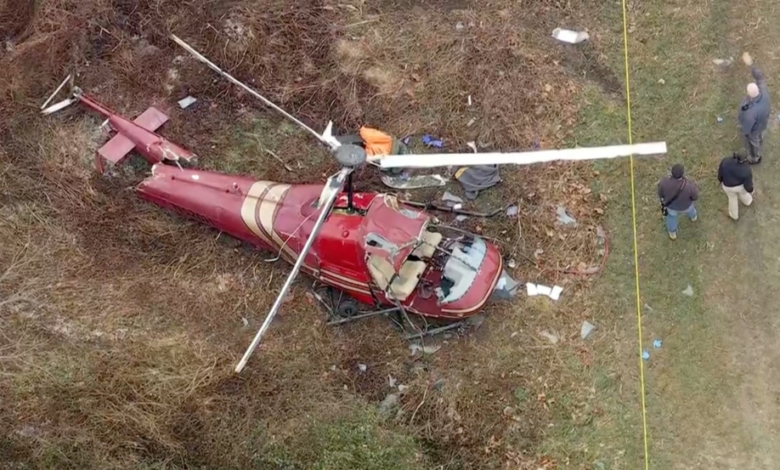
A tragic mid-air collision between two helicopters over Hammonton, New Jersey, left one person dead and another seriously injured. The incident triggered a large-scale security and medical response in the area, with rescue teams rushing to the crash site to manage the wreckage and treat the injured.
According to details from local authorities, only the pilot was aboard each helicopter at the time of the accident. Medical sources confirmed that one pilot died at the scene from his injuries, while the other pilot was rushed to a nearby hospital for treatment, where his condition was described as serious but stable.
Details of the investigations and the relevant authorities
The Hammonton Police Department announced that emergency crews responded immediately to the report of the crash and secured the area to prevent civilians from approaching the debris. In accordance with standard procedures for such air accidents in the United States, the Federal Aviation Administration (FAA) and the National Transportation Safety Board (NTSB) have taken over the investigation.
The National Transportation Safety Board (NTSB) is the independent federal agency responsible for investigating civil aviation accidents in the United States. These investigations typically take a long time to determine the "probable cause" of an accident, as investigators gather evidence from the crash site, examine aircraft maintenance records, review pilots' medical and training histories, and analyze the weather conditions at the time of the collision.
The context of general aviation accidents and the importance of air safety
Mid-air collisions are relatively rare but often catastrophic, particularly in the general aviation and helicopter sectors. These incidents raise serious questions about air safety protocols, the "see-and-avoid" rules pilots rely on in uncontrolled airspace, and the importance of coordination between aircraft in areas with high air traffic.
This incident holds particular significance at both the local and regional levels, serving as a stark reminder of the critical need for strict adherence to air navigation regulations. Investigations into such incidents often lead to new safety recommendations, which may include updates to aircraft communication technologies or modifications to approved flight paths, all aimed at preventing future tragedies and protecting the lives of pilots and civilians on the ground.