Hajj vaccinations for domestic pilgrims 1445: conditions and booking method
With the Hajj season of 1445 AH approaching, the Saudi Ministry of Health has reiterated its call for citizens and residents wishing to perform the pilgrimage from within the Kingdom to complete the necessary vaccinations. These measures are part of the ongoing commitment to promoting preventative healthcare and ensuring the safety of pilgrims, enabling them to perform their rituals in good health and peace of mind during one of the world's largest human gatherings.
Mandatory and recommended vaccinations for domestic pilgrims
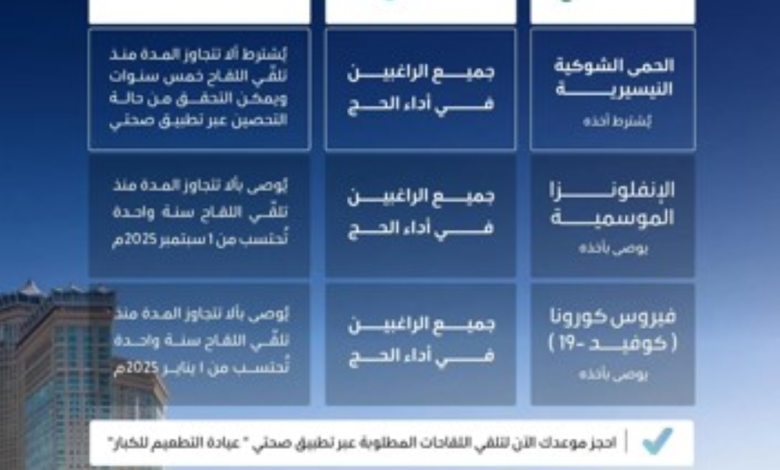
The ministry clarified a list of the necessary vaccinations that every pilgrim and healthcare practitioner participating in the season must obtain, as follows:
- Meningococcal (Neisseria meningitidis) vaccine: This vaccine is mandatory for all domestic pilgrims. Pilgrims must have received at least one dose of the vaccine within the past five years. This immunization is considered the first line of defense against meningitis outbreaks, which can spread rapidly in crowded places.
- Seasonal flu vaccine: The ministry strongly recommends taking this vaccine, especially for the elderly and those with chronic diseases, as it helps reduce the risk of contracting acute respiratory infections that spread easily among crowds.
- Coronavirus (COVID-19) vaccine: The Ministry continues to recommend completing the updated doses of the COVID-19 vaccine, given the continued importance of preventing the virus and its variants, and to protect the health system and society in general.
All those wishing to perform Hajj can easily check their immunization status and book an appointment to receive the required vaccinations through the official “Sehhaty” application.
The historical context of the Kingdom's health efforts during Hajj
Health and preventative measures are an integral part of managing the Hajj season in Saudi Arabia. Over the decades, the Hajj has faced significant health challenges due to the massive gatherings from around the world, sometimes leading to outbreaks of disease. Previous periods, particularly in the 1980s and 1990s, witnessed outbreaks of meningitis, prompting Saudi health authorities to mandate vaccination as a prerequisite for obtaining a Hajj visa for those arriving from abroad, and to strictly enforce it for domestic pilgrims. This preventative strategy has evolved over time to include a comprehensive system of health monitoring at entry points, provision of vaccines, and public health awareness campaigns, making the Hajj a global model for mass health management.
The global importance of health measures in Hajj
The importance of these safeguards extends beyond the local level, forming a vital element of the global health security system. When millions of people from over 180 countries gather in one place, any outbreak of a contagious disease becomes a serious threat, potentially escalating into a global pandemic upon the pilgrims' return home. Therefore, the stringent measures implemented by the Kingdom not only protect pilgrims, citizens, and residents within its borders, but also contribute directly to safeguarding global public health. These efforts are a testament to Saudi Arabia's leading role in public health and crisis management at large gatherings, in collaboration with the World Health Organization and other international bodies.