World leaders divided over Trump's call for a peace council and the marginalization of the United Nations
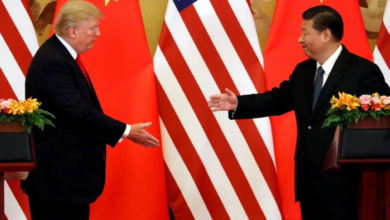
The invitation extended by US President Donald Trump to world leaders to attend the inaugural meeting of the “Peace Council,” scheduled for February 19, has sparked a wide wave of diplomatic controversy and international division, reflecting sharp differences in visions about the future of the global order and mechanisms for resolving conflicts.
Map of division: between Trump's allies and those who uphold international legitimacy
The international community has witnessed mixed responses to the American invitation. While countries whose leaders have close ideological ties to Trump, such as Argentina under Javier Pérez and Hungary under Viktor Orbán, were quick to accept, influential European powers took a different stance. France, Italy, Norway, Croatia, and the Czech Republic all declined to participate, a move interpreted as a reaffirmation of traditional international institutions.
In a related development, Czech Prime Minister Andrej Babiš explicitly stated his country's intention not to join, noting ongoing coordination and consultations among EU member states, several of which have decided against participating in the new entity. Romania, meanwhile, adopted a more cautious stance, with President Nigusor Dan stating that he had received the invitation but that his country had not yet made a final decision, awaiting clarification on the meeting's format and the relationship of non-member states to the Council.
Background of the initiative: An alternative to the United Nations or a tool for managing specific crises?
This initiative comes within the context of Trump’s vision for ending the Gaza war, with plans indicating that a “Peace Council” would oversee the “National Committee for the Administration of Gaza.” However, the council’s charter goes beyond this, encompassing a broader objective: “the resolution of armed conflicts worldwide.” The council’s preamble contains a sharp, implicit criticism of the United Nations, calling for the abandonment of “approaches and institutions that have often failed,” which aligns with Trump’s historical skepticism toward the effectiveness of multilateral international organizations.
Geopolitical repercussions and fears of the fragmentation of the international order
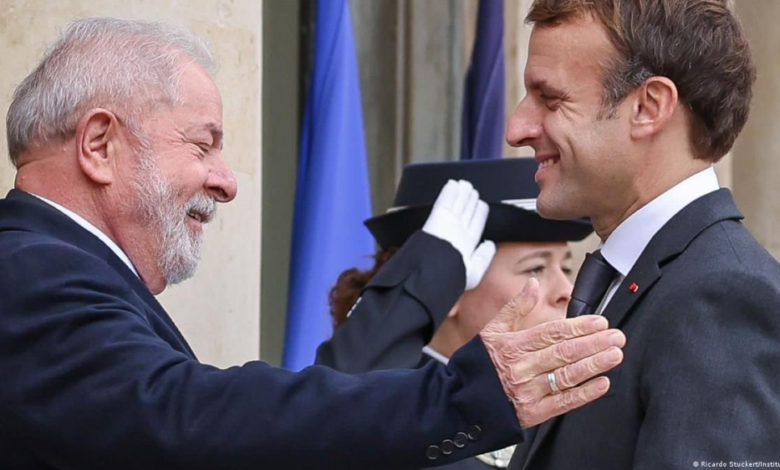
Observers believe that the creation of this council could marginalize the role of the United Nations and the Security Council, creating a parallel track to international legitimacy based on political alliances rather than international consensus. This concern was expressed by French President Emmanuel Macron and Brazilian President Luiz Inácio Lula da Silva, who previously called for strengthening and reforming the United Nations rather than replacing it with new entities that could exacerbate global polarization.
This division not only reflects a disagreement over a call for a meeting, but embodies a deeper conflict over the shape of the new world order; between a Trump-led faction that prefers direct action and bilateral solutions away from international bureaucracy, and a European and international faction that sees preserving post-World War II institutions as a guarantee of global stability.