Fatima Al-Fawz: A visual surrealism that documents the identity of Al-Ahsa and supports talents
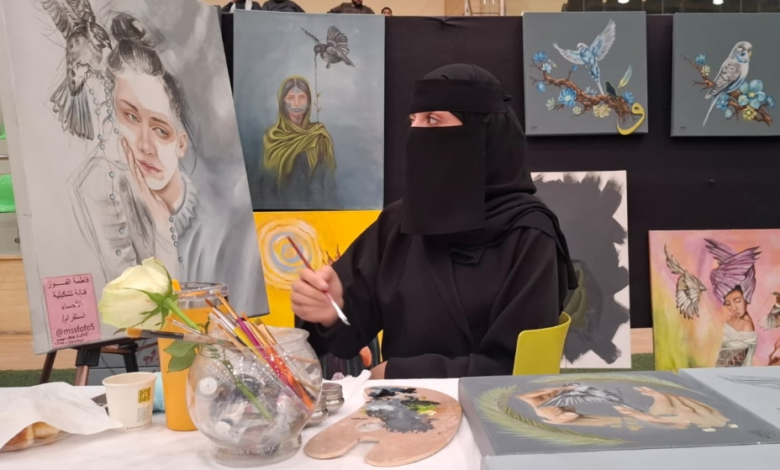
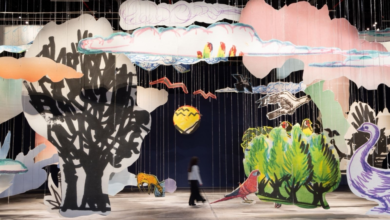
In the heart of the Al-Ahsa Oasis, where the verdant palms intertwine with the history of ancient civilizations, visual artist Fatima Al-Fawz embarks on a unique artistic journey, redefining Surrealism with a local flavor. Al-Fawz doesn't merely paint; she has undertaken a cultural project aimed at integrating the symbols of birds into the collective memory of the place, announcing an ambitious strategic step towards establishing a specialized art academy.
This initiative comes at a time when the Kingdom is witnessing an unprecedented cultural movement, where visual arts are viewed as an integral part of quality of life. Through its project, Al-Fawz seeks to protect children's creative dreams from fading away and to transform their innate talents into sustainable professional paths, building upon a rich history of local and international exhibitions that have documented human emotions through a unique visual language.
Al-Ahsa environment: a cradle of inspiration
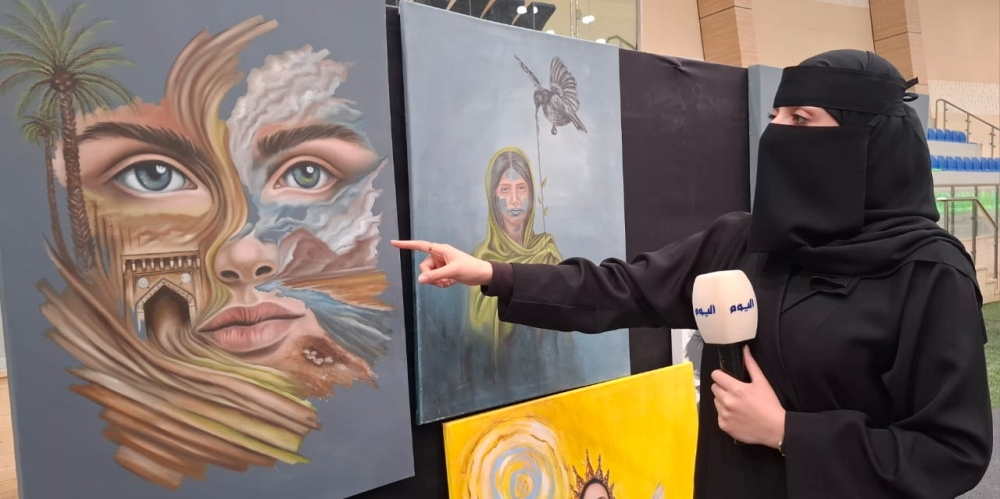
Fatima Al-Fawz's artistic experience cannot be separated from her geographical surroundings in Al-Ahsa Governorate , a UNESCO World Heritage Site. The rich environment of Al-Ahsa, with its palm trees, springs, and historical markets like the Qaysariyah, provides an inexhaustible visual resource for artists. Al-Fawz has successfully employed these elements, particularly the palm tree, as integral backdrops in her works, blending them with surrealist symbols to offer a visual window that expresses memory and place in a style that avoids directness and invites contemplation.
Academy for the Making of the Future
Al-Fawz affirmed her determination to transform her future ambitions into reality by establishing a private art academy dedicated to teaching proper artistic techniques. The artist's primary focus is on children, stemming from her deep belief that talent is innate and requires early nurturing to ensure its continuity and development.
The young woman from Al-Ahsa explained that the academy's goal is to nurture young talents that might otherwise be lost with age and a lack of formal training. The academy will work to refine these talents by teaching the fundamentals of drawing using stimulating methods that build children's self-confidence and help them express themselves freely, thus contributing to the development of a new generation of artists capable of representing the Kingdom on the international stage.
The philosophy of birds and the stories told
Al-Fawz indicated that her artistic identity belongs to the Surrealist and Expressionist schools, as she succeeded in formulating a special visual language that completely avoids photographic imitation of reality, preferring to rely on fertile imagination to translate ideas into stories told with oil paints.
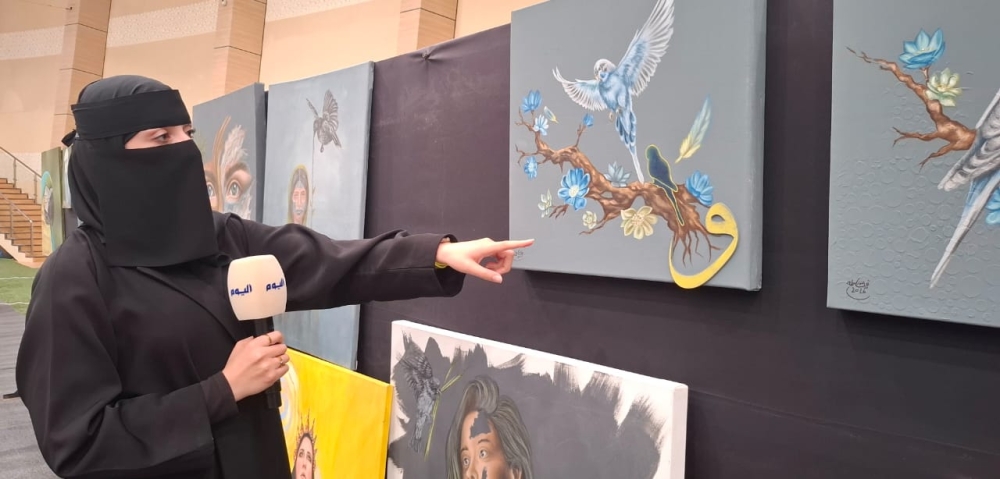
The artist revealed the secret behind the recurring symbolism of the "bird" in her works, describing it as the central element through which she constructs stories that reflect the human psyche. These birds embody diverse emotions that can be interpreted as messages of peace or harbingers of doom, depending on the viewer's awareness and psychological state, thus imbuing the artwork with profound philosophical dimensions that transcend its superficial form.
Woman as a comprehensive human vessel
The artist pointed out that the presence of women in her paintings transcends traditional gender boundaries, becoming a universal human vessel encompassing all human emotions. This approach makes the artwork an open space for interpretation, where both men and women find a reflection of their experiences and memories, thus reinforcing the universality of the artistic message it conveys.
"Eyes of Al-Ahsa": An artistic document of history
The artist discussed her prominent painting, "The Springs of Al-Ahsa," which began as an initial sketch and evolved into an artistic document linking the historical spread of the springs with the flourishing of the palm trees. The painting evokes the Qaysariyah Gate as an architectural testament to the authenticity and continuity of the place from past to present, thus documenting the timeless relationship between the people of Al-Ahsa and their land.
Al-Fawz noted that her first solo exhibition, “On the Wound of a Bird,” hosted by Dar Noura, marked a turning point in her career, as her works revolved around the dialectic of the bird and the human being, presenting a visual experience that stimulates thought and invites the audience to ask questions instead of merely observing casually.
Regional and local presence
The artist highlighted her extensive record of participation, including international exhibitions in the Kingdom of Bahrain in collaboration with artist Khalifa Shuwaiter, and local participations with cultural and arts societies in Dammam and Al-Ahsa. These participations have solidified her presence as an influential artistic voice that blends tradition and modernity, contributing to the enrichment of the Gulf art scene.
Al-Fawz concluded her speech by emphasizing that art, in her view, is not merely a transfer of reality, but rather a process of building visual stories based on research into the depths of the human psyche, and integrating them with elements of nature to present an artistic product that respects the mind of the recipient and provokes his imagination, stressing her continuation in her artistic project to serve society and develop visual taste.