Education: New regulations for exams and prevention of conflicts of interest
In a move aimed at enhancing transparency and improving the efficiency of the education system, the Saudi Ministry of Education has approved a new administrative and organizational structure for managing final examinations. This step comes in response to the requirements of the current phase, in which the Ministry seeks to govern educational processes and ensure the highest standards of integrity, in line with the objectives of developing education and improving its outcomes.
Governance context and promoting integrity
This decision comes as part of the Ministry's ongoing efforts to develop the school environment and make it more disciplined and equitable. Final exams are the primary benchmark for measuring students' academic achievement, necessitating rigorous mechanisms to prevent any interference that could compromise the credibility of the results. Accordingly, the new procedural guide focuses on clearly separating tasks and defining responsibilities to eliminate any duplication of roles within schools and ensure that exams proceed according to a unified process across all regions of the Kingdom.
New administrative structure: Academic Achievement Committee
The ministry adopted a hierarchical model for examination committees, headed by the "Academic Achievement Committee" led by the school principal, which serves as the highest supervisory body. This committee has four specialized executive arms, ensuring coverage of all stages of the examination (before, during, and after)
- Control and Regulation Committee: Headed by the Undersecretary for School Affairs, it is concerned with the entire logistical aspect, starting from preparing the halls and preparing the seating numbers, ensuring that the walls are free of educational aids, up to securing and storing the answer sheets.
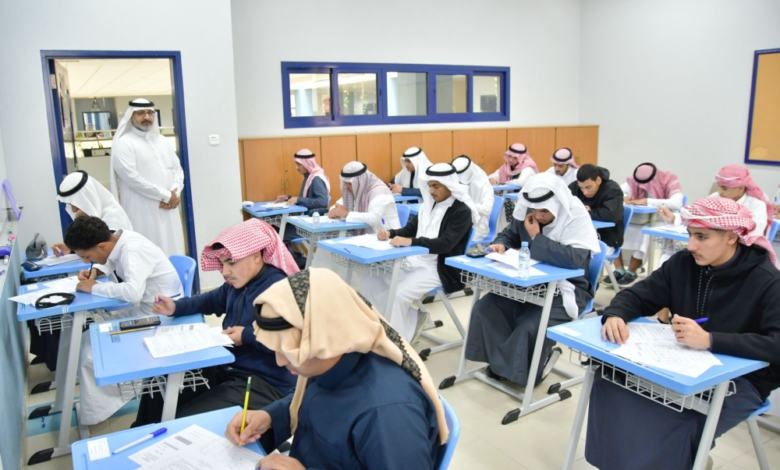
- Supervision and Observation Committee: It is headed by the Student Affairs Officer and is actively active during the exam to manage the field, distribute the observers’ schedules, open the question envelopes, maintain order inside the halls, in addition to writing up violation reports if any exist.
- Correction and Review Committee: Headed by the Undersecretary for Educational Affairs, its duties begin after the end of the exam time, as it supervises the delivery of papers to the examiners and checks the grades to ensure that every student gets his due without errors.
- The Monitoring and Results Committee: It is also headed by the Undersecretary for Educational Affairs, and is responsible for entering grades into the electronic systems, printing drafts and final versions, and conducting the final data verification.
Preventing conflicts of interest: Strict regulations for teachers
Perhaps the most significant aspect of the new regulations is the emphasis on preventing conflicts of interest. The ministry has established a binding condition prohibiting teachers from participating in any committee work (observation or marking) related to classes attended by a first-degree relative. This measure aims to:
- Ensuring complete impartiality in handling student papers.
- Removing embarrassment from teachers and administrators.
- To enhance the confidence of the community and parents in the credibility of the final results.
The system requires the school administration to reassign the member who has a first-degree relative to other tasks completely unrelated to the class in question, reflecting the ministry’s keenness to close any loophole that may affect the fairness of competition among students.