Education: Preventing the merging of classes and enforcing discipline before exams
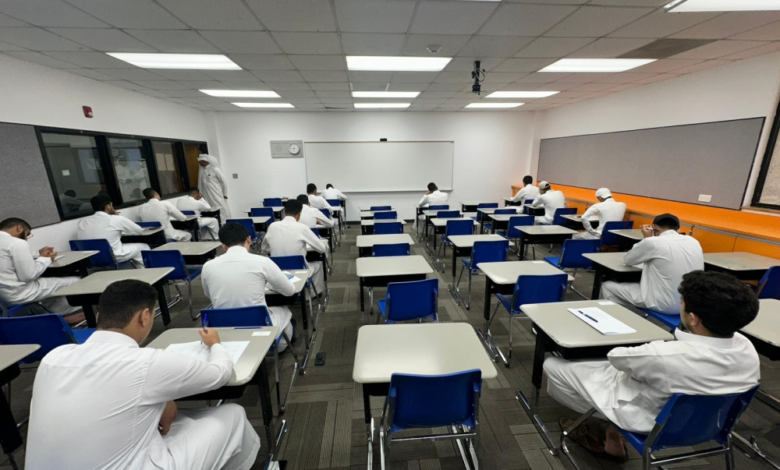
Education departments across Saudi Arabia have raised their alert levels to maximum, announcing a series of strict measures to enforce school discipline as the final exams for the first semester begin. These actions are part of the Ministry's efforts to establish a serious learning environment that guarantees fairness and equal opportunities for all students during this crucial stage of the academic year.
Strict measures to prevent educational waste
The new ministerial directives emphasized that the current phase allows no leniency, instructing disciplinary committees to closely monitor cases of absence and tardiness and to immediately apply the established procedures according to the approved guidelines, including deductions from attendance marks. In a move aimed at eliminating the laxity observed in recent days, the ministry mandated that educational institutions strictly adhere to the curriculum and conduct classes according to their usual schedules, categorically prohibiting the merging of classes except in the most exceptional circumstances dictated by absolute necessity, to ensure that students receive their full right to education until the very last moment.
Context of the transformation: Eliminating the "dead week" phenomenon
These decisive measures come within the framework of the Ministry of Education's ongoing efforts, spanning several years, to eliminate what was previously known as the "dead week" preceding exams, during which absenteeism rates rose significantly, negatively impacting academic performance. As part of its modern strategy, the Ministry is working to change this prevailing culture, reinforcing the concept that the school day has invaluable, cumulative worth, and that exam preparation begins with attendance and review in class, not with absence.
Digital monitoring via the "Noor" system
In the context of the Kingdom's digital transformation, schools have been urged to intensify awareness campaigns for families and students, emphasizing the critical need for meticulous accuracy in matching actual attendance with the data recorded in the "Noor" electronic system. Regulatory bodies have deemed any manipulation or negligence in recording absences a serious violation warranting legal and administrative accountability for school leaders, stressing that data integrity is the fundamental criterion for evaluating institutional performance.
Educational impact and vision objectives
This administrative and field activity, which includes intensive inspection tours by specialized committees, falls within a comprehensive strategy to create a stable educational environment that supports the psychological and mental well-being of students. This approach also aligns with the objectives of the Kingdom's Vision 2030 and the Human Capability Development Program, which focuses on improving educational outcomes and raising the efficiency of the educational system to ensure the graduation of a disciplined generation capable of competing globally, as school discipline is considered the cornerstone of future academic and professional success.