The death of director Daoud Abdel Sayed... the passing of a philosopher of Egyptian cinema
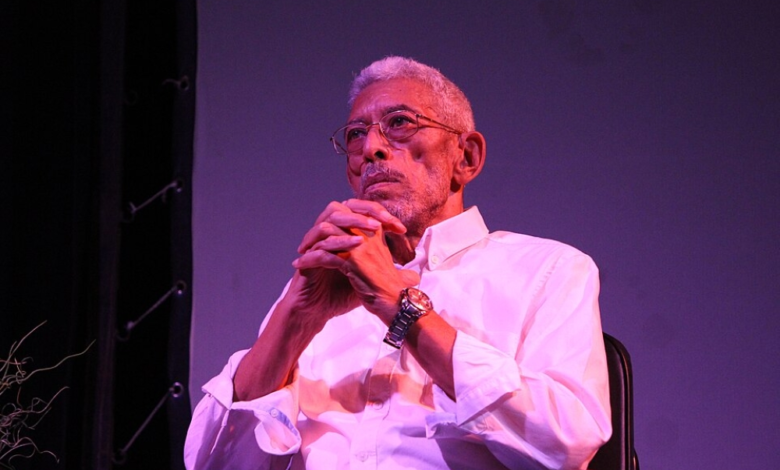
In news that saddened the artistic and cultural community in the Arab world, the Syndicate of Acting Professions in Egypt, headed by Dr. Ashraf Zaki and the members of the Board of Directors, mourned the great film director Daoud Abdel Sayed, who passed away, leaving behind a unique cinematic legacy and an exceptional artistic career that engraved his name in letters of gold in the history of the seventh art.
The union issued an official statement in which it offered its sincere condolences and sympathy to the family of the deceased, his students and loved ones in Egypt and the Arab world, praying to God Almighty to have mercy on him and grant him a place in Paradise, and to inspire his family with patience and solace in this great tragedy.
An artistic journey that began from "the ground"
The late director Daoud Abdel Sayed was born in Cairo in 1946, and his upbringing in the Egyptian capital formed a significant part of his visual and cultural development. He graduated from the Higher Institute of Cinema in 1967, a period that witnessed major transformations in Egyptian society. He began his career as an assistant director to the legendary Youssef Chahine on the film "The Land," which gave him extensive experience and a keen understanding of cinematic framing, before he turned to documentary filmmaking, which refined his perspective on social reality.
Pioneer of neorealism and philosopher of cinema
Daoud Abdel Sayed is considered one of the leading figures of the "New Realism" movement in Egyptian cinema, which emerged in the 1980s, alongside renowned directors such as Mohamed Khan, Khairy Beshara, and Atef El-Tayeb. Abdel Sayed's work was distinguished by its ability to not only depict reality but also delve into the depths of the human psyche, posing philosophical and existential questions, earning him the title of "the philosopher of Egyptian cinema.".
Abdel Sayed was both director and writer of most of his works, which gave his films a distinctive style and a rare thematic unity. Among his most notable films are "The Scoundrels" (1985), which offered a different perspective on the marginalized, and "Kit Kat," considered an icon of Arab cinema, where he portrayed Sheikh Hosni (Mahmoud Abdel Aziz) as a symbol of insight in a world of the blind.
A cinematic legacy that defies time
Although his feature films were not numerous, they were significant in terms of artistic value and impact. He directed masterpieces such as "Land of Fear" with the star Ahmed Zaki, which explored the philosophy of good, evil, and duty, and "A Citizen, a Detective, and a Thief," which depicted the transformations of Egyptian society, culminating in "Messages from the Sea" and "Extraordinary Abilities.".
His work garnered dozens of local and international awards, and several of his films were selected among the 100 most important films in the history of Egyptian cinema. With his passing, Arab cinema loses one of the last knights of a generation of giants who believed that cinema is art, thought, and a message before it is an industry.