27 killed in clashes between FARC dissidents in Colombia
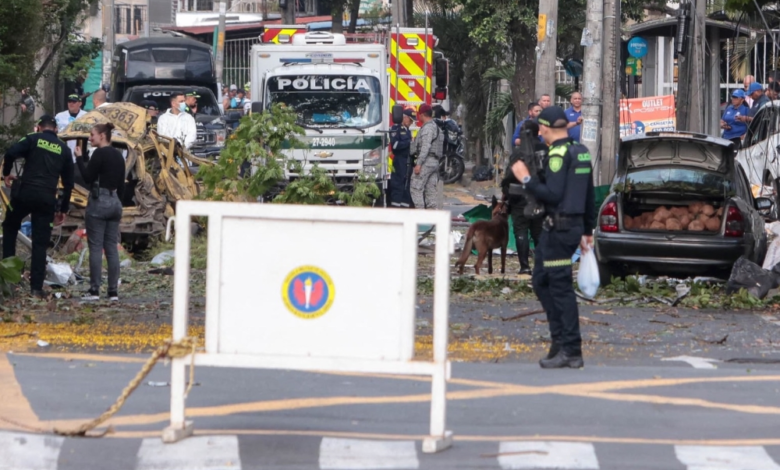
The Amazon region of southern Colombia has witnessed a dangerous escalation in violence, with at least 27 people killed in fierce clashes between two leftist armed groups, according to official military sources who spoke to AFP. These brutal battles are taking place in the strategic Guaviare department, located deep within the Colombian rainforest, highlighting once again the security challenges facing the country despite previous peace agreements.
Details of the conflict between the splinter factions
Field reports indicate that clashes erupted between two factions that broke away from the Revolutionary Armed Forces of Colombia (FARC). One faction is led by Iván Mordisco, one of Colombia's most wanted men due to his persistent refusal to engage in peace negotiations, while the other is led by a man known by his nom de guerre, Calarca. A video obtained by the Colombian military shows the scale of the tragedy, documenting more than 20 bodies of men in combat fatigues lying on a dirt road at the site of the fighting.
Motives for fighting: drugs and influence
This conflict is not merely an ideological dispute; it is a fierce struggle for resources and influence. The two groups are vying for control of vital drug trafficking routes that traverse the dense Amazon rainforest, as well as for control of illegal mining areas and the lucrative extortion operations that fund their military activities. These remote regions provide ideal havens for armed groups due to their difficult terrain and weak government presence.
Historical background: The legacy of the 2016 peace agreement
These groups trace their roots back to the FARC, the rebel movement that signed a historic peace agreement with the Colombian government in 2016, ending a decades-long conflict that left millions dead and displaced. However, some factions refused to lay down their arms or later took them up again, forming what are known as "dissidents." This fragmentation has led to the emergence of numerous competing groups, complicating the security situation and hindering efforts to achieve full stability in the country.
Challenges of the "comprehensive peace" policy
This escalation comes at a critical time for Colombian leftist President Gustavo Petro, who has adopted a policy of "Paz Total" (Total Peace) aimed at negotiating with all armed groups to end the violence. Mordisco had previously engaged in peace talks with the government but withdrew in 2014 and intensified its attacks against civilians and security forces, placing immense pressure on President Petro's strategy. Meanwhile, the group led by Calarca has begun similar talks, but they have proceeded sporadically and inconsistently.
Regional and local impact
This internal conflict raises serious concerns about the stability of the Amazon, which is not only the world's ecological lung but also a sensitive border region. The ongoing violence is displacing local populations, increasing cross-border crime rates, and hindering development efforts and climate change mitigation in one of the most vital ecological areas on Earth.