Electronic skin gives robots the ability to feel pain: A Chinese innovation
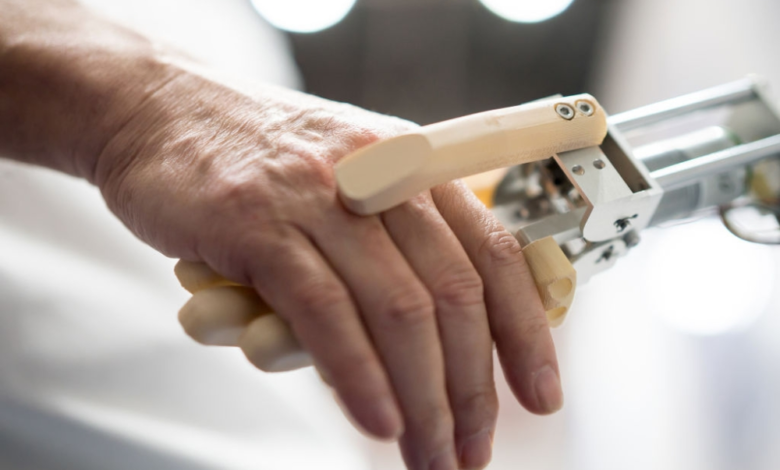
In an unprecedented scientific step that brings us closer to the world of science fiction, a Chinese research team announced the development of an advanced technology in the form of a neuromorphic robotic e-skin, which represents a huge qualitative leap in the ability of human-like robots to sense pain and react to it intelligently and with high accuracy.
Simulation of the human nervous system
The researchers explained that the new design not only senses pressure but also mimics the mechanisms of human skin and the complex nervous system, enabling robots to respond instantly to harmful contacts with rapid reflexes, just as humans do when they touch a hot surface or a sharp object. This feature is crucial for protecting the robot's internal structure from damage and ensuring its continued operation.
New electronic skin components
This advanced skin consists of four integrated layers working in precise harmony: a flexible protective layer, a highly sensitive neural sensor network, a continuous self-monitoring system, and a direct reflex response mechanism that sends signals to the motors when pressure exceeds safety limits. Furthermore, the innovation features a "quick repair" capability via replaceable magnetic modules, simplifying maintenance and extending the robot's lifespan.
Scientific context and the development of robots
This achievement comes amid a fierce global race to develop "soft robots" and bioelectronics. Historically, robots have relied on rigid optical or mechanical sensors to avoid obstacles, but they lacked the refined sense of touch that distinguishes humans. The ability to "feel pain" is not meant to torture the machine; rather, it's a biological defense mechanism that has been engineered to enable machines to perceive and avoid immediate physical hazards before serious harm occurs.
The importance of innovation and its future impact
The paramount importance of this innovation lies in its anticipated impact on multiple sectors, both locally and globally. In the industrial sphere, this skin will enhance the safety of "cooperative robots" (Cobots) that work alongside humans in factories, enabling the robot to stop immediately or move away in the event of unintended contact that could harm the human operator or the robot itself.
On the medical front, this research opens up vast possibilities for developing smart prosthetic limbs that enable amputees to regain their sense of touch and awareness of their surroundings, thus dramatically improving their quality of life. The research team is currently continuing to develop the system to enhance its sensitivity and ability to handle multiple, simultaneous touches, paving the way for a new generation of robots capable of safe and natural interaction with humans in homes and hospitals.