Thailand and Cambodia talks: Efforts to end border and temple dispute
Cambodian authorities announced Wednesday the start of a new round of official talks with Thailand, scheduled to last four days, in a serious effort to end the armed border clashes that have plagued both countries. This diplomatic move comes amid cautious hopes of halting the bloodshed and restoring stability to the volatile region.
Details of the meeting and the dispute over the location
The current meeting is being held at a border crossing in Thailand's Chanthaburi province. This meeting was preceded by diplomatic wrangling, with the Cambodian capital, Phnom Penh, demanding that the talks be held in a neutral location to ensure a level playing field. However, the Thai government maintained its refusal, ultimately leading to acceptance of the situation and the commencement of dialogue. To confirm the start of negotiations, the Cambodian government released an official photograph of the two delegations, announcing the launch of diplomatic efforts.
The historical roots of the conflict
This conflict is not a recent development; its roots extend back decades, specifically to the French colonial era in Indochina. The dispute centers on sovereignty over a border region stretching approximately 800 kilometers, encompassing historical temples dating back to the ancient Khmer Empire. Cambodia bases its claims on maps drawn by the French colonial authorities at the beginning of the 20th century, while Thailand relies on different maps that align with natural water boundaries, creating "disputed" areas that exacerbate national sensitivities for both populations.
De-escalation efforts and international interventions
Cambodia clearly defined the objectives of this round of talks as "ensuring a cessation of hostilities, restoring stability, and facilitating a swift return to normalcy." For his part, Thai Defense Ministry spokesman Surasant Kongsiri told reporters in Bangkok that he hoped for positive results, while emphasizing that "the success of the negotiations depends entirely on the sincerity of Cambodia's intentions in word and deed." Despite the continued skirmishes, the Cambodian Interior Ministry expressed optimism regarding Thailand's commitment to the ceasefire.
The two sides had signed a ceasefire agreement in Kuala Lumpur at the end of last October under the auspices of US President Donald Trump, but this agreement quickly collapsed and Bangkok suspended its implementation a few weeks later following a landmine explosion that injured a number of its soldiers, thus returning the tension to square one.
The enormous human cost
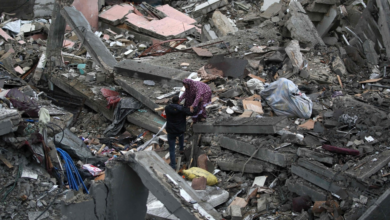
The renewed clashes since December 7 have exacted a heavy human toll, with official statistics indicating at least 44 deaths (23 on the Thai side and 21 on the Cambodian side). Even more serious are the social and economic repercussions, as the fighting has caused the massive displacement of more than 900,000 people from border areas on both sides of the conflict, creating a displacement crisis that requires urgent solutions to ensure the safe return of these civilians to their villages and farms.