Average Umrah journey time: 117 minutes: New statistics from the Grand Mosque
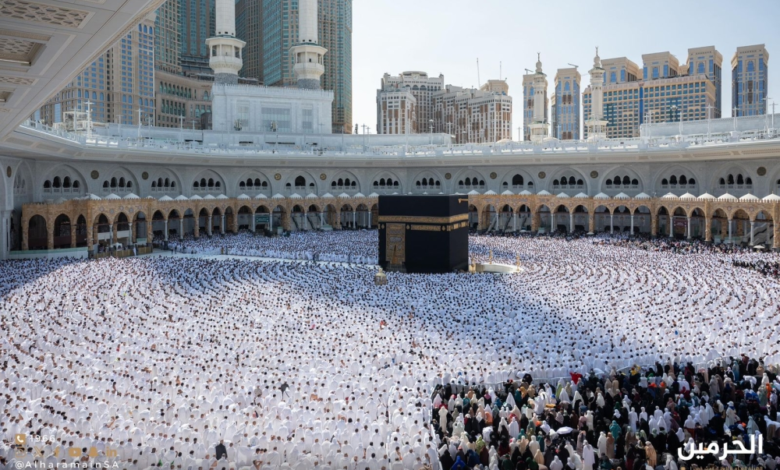
The General Authority for the Care of the Two Holy Mosques revealed the latest operational indicators related to Umrah pilgrimage performance. The results of a field trial conducted during Jumada al-Thani 1447 AH showed significant improvements in the crowd management system. The average time for a complete Umrah journey was recorded at only 117 minutes, a positive indicator of the efficiency of the operational plans and the smooth flow of pilgrims within the Grand Mosque in Mecca.
field data and crowd movement
analysis revealed that the vast majority of pilgrims, up to 94%, prefer to perform Tawaf (circumambulation of the Kaaba) in the Mataf (circumambulation area). This reflects the success of the expansion projects in accommodating large crowds and efficiently distributing pathways in the central area. The average duration of Tawaf was approximately 46 minutes, while the journey from the outer courtyards to the Mataf took only 10 minutes, and the same amount of time to travel from the Mataf to the Sa'i (the area between Safa and Marwa). This highlights the efficiency of the spatial and engineering integration between the various rituals within the Grand Mosque.
Regarding the ritual of Sa'i, the average time for completing it was 51 minutes. Notably, statistics show that 64% of pilgrims performed Sa'i on the ground floor, which directly contributed to easing pressure on the upper floors and achieving a relative balance that reduces overcrowding and facilitates the movement of the elderly and people with special needs.
Within the context of Vision 2030 and the Guests of God Program,
these record-breaking figures are a direct result of the "Guests of God Service Program," one of the initiatives under Vision 2030, which aims to transform the experience of Umrah and Hajj pilgrims. Through these efforts, the Kingdom seeks to increase the capacity of the Grand Mosque while maintaining the highest standards of safety and comfort. Reducing the time required to perform the rituals is not an end in itself, but rather a natural consequence of improved infrastructure, the application of artificial intelligence in crowd management, and the development of smart applications that help pilgrims choose less crowded times.
The strategic importance and anticipated impact
of this development in Umrah management are significant at both the regional and international levels. It underscores the Kingdom of Saudi Arabia's ability to efficiently and effectively manage millions of people. Furthermore, the smooth flow of movement means enabling a greater number of Muslims worldwide to perform their rituals with ease and convenience, contributing to the goal of reaching 30 million Umrah pilgrims annually. The General Presidency for the Affairs of the Two Holy Mosques continuously studies these indicators to improve communication channels and enhance field services, ensuring that pilgrims perform their rituals in a spiritually uplifting and tranquil atmosphere.