The Judge's Council emphasizes the role of councils in promoting social cohesion
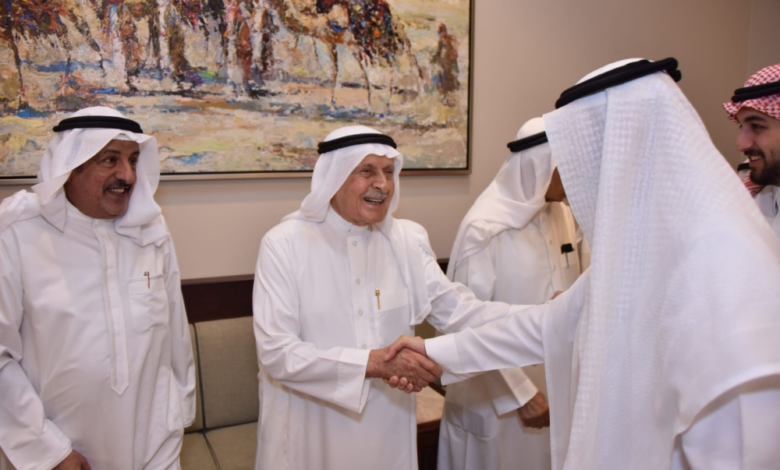
In an atmosphere of faith and spirituality, filled with warmth and harmony, the majlis of Ahmed bin Mohammed Al-Qadi welcomed well-wishers on the occasion of the holy month of Ramadan. Attendees exchanged greetings and blessings, emphasizing the deep social bonds embodied by this blessed month. Community leaders and residents from all walks of life, including prominent figures, intellectuals, and businesspeople, flocked to the majlis, all eager to participate in this gathering that reflects the authentic Saudi tradition of communication and compassion.
During the meeting, Ahmed Al-Qadi emphasized that these gatherings serve as authentic platforms for strengthening bonds of affection and reinforcing the values of unity and solidarity among members of society. He noted that receiving well-wishers during the holy month embodies the true meaning of brotherhood and reinforces the spirit of purity and tolerance that characterizes this great season of faith. He added that these gatherings represent a continuation of the social heritage based on interconnectedness and direct communication.
The historical and cultural context of Saudi councils
The majlis, or "council," is an integral part of the cultural and social fabric of Saudi Arabia and the Arabian Gulf region in general. It represents a rich historical legacy dating back centuries, serving as a kind of mini-parliament, a center of local governance, and a cultural forum. In these majlises, the ruler or tribal sheikh would meet with members of his community to listen to their concerns, resolve disputes, and exchange news and knowledge. They were, and remain, open spaces for all, reflecting the values of generosity and authentic Arab hospitality, where visitors are welcomed and offered Arabic coffee and dates as a symbol of welcome and respect.
The importance of gatherings during Ramadan and their social impact
Majlis gatherings take on special significance during Ramadan, transforming into vibrant social hubs after Taraweeh prayers. These gatherings become a primary platform for strengthening family ties, fostering neighborly relations, and transmitting experiences and knowledge across generations. Locally, these gatherings contribute to reinforcing the social fabric, preserving oral traditions such as stories, poems, and proverbs, and serving as an informal social safety net. Regionally, the majlis represents a shared cultural element that reinforces a unified Gulf identity. This practice has garnered international recognition, with UNESCO inscribing the majlis on its Representative List of the Intangible Cultural Heritage of Humanity, affirming its universal human value as a space for dialogue and community engagement.
The meeting at the judge's council concluded with prayers that God would bring back the blessed month to everyone with goodness, prosperity, and blessings, and that He would perpetuate the blessings of security, safety, and stability upon the nation under its wise leadership. The judge affirmed that the council would remain a unifying space reflecting the depth of human relations and supporting all that contributes to serving and developing society.