Escalation on the Afghan-Pakistani border: Taliban announce capture of soldiers
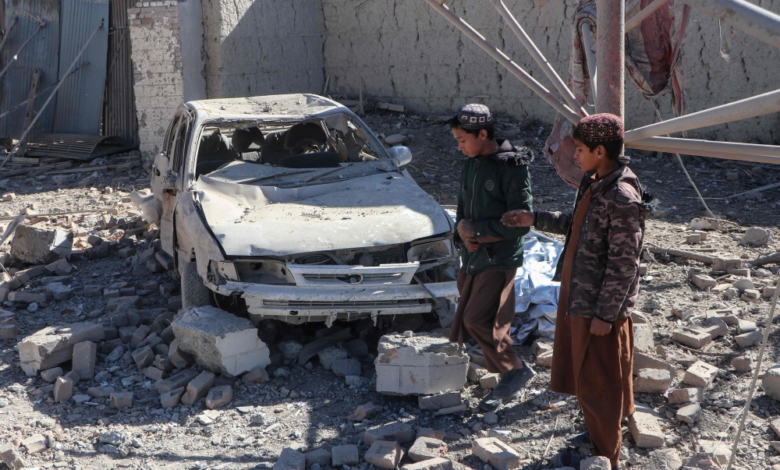
The Taliban government in Afghanistan announced on Thursday that its forces had launched an attack on Pakistani border posts, killing and capturing a number of Pakistani soldiers. This attack came as a direct response to airstrikes carried out by Islamabad on Afghan territory days earlier, marking a dangerous escalation of tensions between the two neighboring countries.
Taliban spokesman Zabihullah Mujahid confirmed via the “X” platform (formerly Twitter) that Pakistani forces had suffered casualties, stating, “A number of soldiers were killed, and several were captured alive.” In response, Pakistan vowed an “immediate and effective” retaliation. The Pakistani Ministry of Information stated that Afghanistan had “unprovoked fire on several locations” in Khyber Pakhtunkhwa province, adding that its forces were responding decisively.
Historical background of border tensions
The roots of the current tension lie in decades of complex relations and unresolved border disputes. The Durand Line, the 2,670-kilometer border between the two countries, is the main point of contention. Demarcated in 1893 during the British colonial era, this line has not been recognized by any successive Afghan government, including the current Taliban regime, which considers it an artificial division of Pashtun lands on both sides of the border.
Historically, relations between Kabul and Islamabad have been volatile, with Afghanistan accusing Pakistan of supporting insurgent groups to destabilize it, while Pakistan has accused Afghanistan of harboring militants who launch attacks inside its territory, an accusation that has been strongly renewed recently.
The importance of the event and its expected impact
This escalation is particularly significant because it comes at a critical time for both countries and the entire region. Since the Taliban's return to power in August 2021, attacks by the Pakistani Taliban (TTP) against military and civilian targets inside Pakistan have increased. Islamabad accuses the Taliban government in Kabul of providing safe havens for TTP fighters, an accusation Kabul consistently denies.
At the local and regional levels, this open conflict threatens to destabilize fragile border areas, could trigger new waves of displacement, and disrupt vital trade between the two countries. It also places additional strain on regional relations, particularly given the interests of major powers like China, which has invested heavily in Pakistan through the China-Pakistan Economic Corridor (CPEC) and seeks stability in Afghanistan.
On the international level, a large-scale conflict between two nuclear-armed states (Pakistan) and its neighbor, Afghanistan, which is suffering from humanitarian and economic crises, would be a nightmare for the international community. Such an escalation would complicate counterterrorism efforts in the region and exacerbate the suffering of the Afghan people, who rely heavily on international aid and border crossings with Pakistan to meet their basic needs.