Qassim Education launches advanced Wood Badge training course to qualify leaders
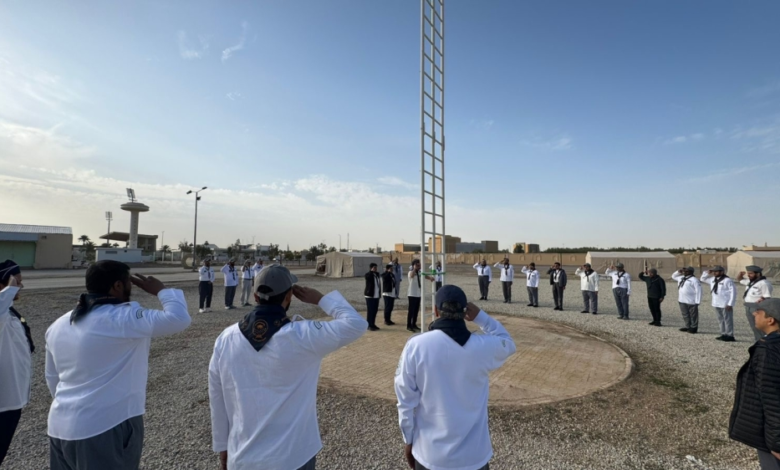
The advanced Wood Badge training course, organized by the General Directorate of Education in the Qassim region under the supervision of the Saudi Arabian Scouts Association, commenced today and will continue until Thursday, Sha'ban 17, 1447 AH. Thirty aspiring scout leaders are actively participating. This initiative is part of ongoing efforts to enhance the skills of scout leaders and equip them with the necessary expertise to lead teams and units effectively.
The importance of the wood badge in scouting work
The Wood Badge is one of the most important leadership training programs in the global Scout Movement, representing a symbol of competence and eligibility to lead Scout units. This qualification traces its roots back to the founder of the Scout Movement, Lord Baden-Powell, who designed the program to ensure the standardization of leadership and training concepts worldwide. Earning this badge is considered recognition of a Scout leader's possession of the theoretical and practical skills necessary to nurture young people and build leadership qualities in youth, which is precisely what the current study in Qassim aims to instill in its participants.
Scouting and the Kingdom's Vision 2030
During the opening ceremony, the study's leader, Abdulaziz Al-Rubaie, emphasized that scouting is fundamentally based on the principle of volunteering. He pointed out that the Kingdom's scouts operate according to multi-track strategic plans to contribute directly to achieving the goals of the Kingdom's Vision 2030. This ambitious vision focuses heavily on developing the volunteer work system and reaching one million volunteers, with scouts playing a pivotal role in this aspect by promoting a culture of giving and community participation, thus supporting the Sustainable Development Goals at the local, national, and international levels.
Comprehensive training program and field applications
Al-Rubaie explained that organizing this study affirms the General Directorate of Education in Qassim's commitment to supporting and encouraging scouting activities, given their effective role in contributing to the success of educational programs. He indicated that the study aims to develop participants' abilities in leading scouting units and qualify them for advanced levels through an intensive training program combining theoretical sessions and practical applications. The program covers several topics, including the responsibilities of a unit leader, modern youth training methods, leadership concepts and theories, strategic planning and the characteristics of a successful plan, scouting curricula, research methods, and the development of financial and human resources.
Wilderness skills and land navigation
In the context of practical application, the study leader pointed out that the program concludes with a practical field trip, a cornerstone of advanced scouting training. During this trip, participants acquire skills in land navigation, dealing with secret signs, mapmaking, estimation and direction, and deciphering codes and encrypted messages. These field activities aim to refine the scout leader's character, enhance their decision-making abilities in diverse circumstances, and foster self-reliance, thus ensuring the graduation of a generation of leaders capable of shouldering responsibility and serving their community and nation effectively and competently.